Showing posts with label history. Show all posts

Wednesday, October 31, 2018

Happy Reformation Day!

Martin Luther
While most folks celebrate this day as Halloween, I prefer to remember it as Reformation Day.

On this day back in 1517, Martin Luther made history by nailing the Ninety-Five Thesis to the door of All Saints Church in Wittenburg, Germany. This thesis sparked the Reformation and the translation of Scriptures into common language. Luther believed that the Roman Catholic Church had strayed from the original intent of the Scriptures, and the common people needed to know. Many of his views were seen as heresy by the Roman Catholic Church, and they deemed him a dangerous heretic.

This short video by Drive Thru History gives you a great summary.


So as you go about your day, remember also the momentous occasion that resulted in us having the Scriptures in our own language to read. That's something to be grateful for, whether or not you agree with all of Luther's theology or not. :)

Happy Reformation Day!

Tuesday, September 18, 2018

Why I Write Historical Fiction


I just finished writing my first contemporary book. It’s a Christmas novella and women’s fiction instead of my typical romance. But even in this contemporary setting, touches of the historical sneak in. One of the main characters is a minimalist who rejects many modern conveniences by choice. So she lives in two worlds—that of today and that of a hundred years ago.


In writing this book, I realized why I like to both read and write historical fiction. It’s not for the famous people or events that define a particular era—the kind of stuff you get out of history books. No, historical fiction is valuable for giving us an understanding of the culture of the time. The people’s livelihoods, their religion, their dreams, their relationships. How they were different from people of today. How we of the twenty-first century are still like people of the past. Because there is a common denominator that transcends time.
The churches of history can define the strength of the people’s faith. The church buildings of the past were either humble or magnificent, but they were much more crowded than today. Church played a bigger part of people’s lives in the Victorian era, for example. It was more than a place to feed the spirit. It was a gathering place for people with moral standing (whether genuine or not). The local saloon served as the social center for those without morals, but everyone knew the difference. They had a clearer view of right and wrong. I'm not sure they do anymore.

Every generation seems to want to slant history to fit its particular politics, which is to be expected. However, some take this to extremes and try to erase history, or those parts of it they deem bad. Confederate leaders’ statues are being taken down, never mind that these men played an enormous part in history. Books are being banned, like Huckleberry Finn, much like Catcher in the Rye was years ago. I suppose it’s only a matter of time until the Bible is banned here, as it is in many countries now.
Removing any part of history is hiding the truth, and a way to deceive people.
So I thank the Lord for those who write historical fiction. Lest we forget.

Why, or why not, do you like historical fiction? Comment to win this week's Giveaway: BEFORE I KNEW YOU BY BETH STEURY

Here is my working cover of the Christmas novella to be released next month.

With her husband away on a job until Christmas, newly-wed Amanda moves to the house they’ve inherited from his grandmother in order to prepare it for sale. In the isolated woods of western South Carolina, her nearest neighbor is an elderly woman who holds onto a past way of life, even taking in wash to earn money for Christmas. As the two women work together to renovate the house, Amanda comes to realize the washwoman isn’t the eccentric kook she first thought, but a woman of wisdom and grace who helps Amanda face the demons of her  past and find release from her present insecurities.  

Tuesday, April 17, 2018

Backcountry Romance

How exciting that Barbour released The Backcountry Brides early! This collection includes Her Redcoat, my story set at Fort Michilimackinac during the Indian uprising known as Pontiac's Rebellion.

The backcountry, which is what the Colonials called the frontier, was sparsely populated, largely inhospitable, and undeniably dangerous. Not the best setting for a romance!

Or is it?

Romance in the backcountry looked very different from romance today. Remember that sparsely populated part? There wasn't a lot to choose from. Marriages were often for protection, companionship, and to share the workload. In short ... they were practical.

But that doesn't mean there couldn't be a spark. A certain something. A change in the air. An awakening of desire. 

My hero and heroine meet at a time when cultures were clashing. The French were moving out, the British were moving in, the local tribes were being forever changed, and a new culture of those with mixed European and native blood was rising. Tensions were high. The stakes were life and death. However, the human heart being what is it, my hero and heroine are drawn together.

They don't have years - or even months - to work out a traditional courtship. Time is short and danger surrounds them. They have one shot and must find the courage to take it, even though it means turning their backs on everything else. 

It was a brutal time in our history and one in which the weak did not survive. I enjoyed writing their story, and I hope readers will enjoy it as well.

Don't forget to leave a comment to get your name in the drawing for
Cloaked in Love by Stitches author Elaine Manders! Winner will be
announced in the April 30th edition of the Weekly Windup. 


Pegg Thomas lives on a hobby farm in Northern Michigan with Michael, her husband of *mumble* years. A life-long history geek, she writes “History with a Touch of Humor.” When not working or writing, Pegg can be found in her barn, her garden, her kitchen, or sitting at her spinning wheel creating yarn to turn into her signature wool shawls.


Tuesday, March 6, 2018

The Enduring Shawl

Nobody knows when the first shawl was worn. Likely there have been shawl-type wraps since Adam and Eve upgraded from fig leaves.

Almost every culture around the world can boast a unique shawl pattern of some type. Woven or knitted, sturdy or sheer, sheep's wool or finest silk, the simple shawl is anything but.

The name may change with the culture. Don't call a Scot's tartan a shawl ... but it is. Some other names are mantle, fichu, wrap, tippet, and stole. They may be square, rectangular, circular, triangular, oval, crescent, or even asymmetrical in shape. They may be plain and drab or ornate and colorful. The possibilities are endless.

One thing that is universal ... women have been wearing them for centuries.

The popularity of shawls is on the uptick today. Ravelry, an online knitting community, boasts somewhere around 30,000 different shawl patterns. That's not a misprint. Thirty thousand! Something this basic, this timeless, this useful ... deserves a little respect.

As a writer of historical fiction, shawls wind up in all my stories. They've intrigued me for many years. In fact, they've intrigued me so much that I started making them. A lot of them. It's become one of my passions. Now, to celebrate the release of my books, I give away one of my signature shawls to one lucky subscriber to my newsletter.

The Backcountry Brides Collection releases on May 1st. My story in the collection, Her Redcoat, is set at Fort Michilimackinac at the Straits of Mackinac where Lakes Michigan and Huron meet. Today, this area is known for its beautiful lilacs. To celebrate the release, I'm giving away Northern Lilacs, my 100% handspun, handknit wool shawl. The drawing will be on May 31st. To enter, subscribe to my newsletter. That's it!


Pegg Thomas lives on a hobby farm in Northern Michigan with Michael, her husband of *mumble* years. A life-long history geek, she writes “History with a Touch of Humor.” When not working or writing, Pegg can be found in her barn, her garden, her kitchen, or sitting at her spinning wheel creating yarn to turn into her signature wool shawls.

http://www.peggthomas.com
Follow her on Facebook

Tuesday, September 5, 2017

Chips, the Hero Dog of WWII

Chips
By Shirley Raye Redmond

A few months ago, I wrote a piece for this blog about Stubby, the most decorated dog of World War 1. It seems appropriate then to write another post about the most decorated canine hero of World War II, especially since the formal end of the war took place 72 years ago this month on September 2, 1945, when the Japanese signed surrender documents. Chips was the most famous dog of the second world war.

 A family in Pleasantville, New York, donated him to the Army. Chips, a German shepherd mix, was trained to be a guard dog. If you watched the recent movie Megan Leavey, about a female Marine and her combat dog Rex, then you know that the training of a combat canine can last from one month to fourteen weeks. Soldiers called handlers are paired up with the dogs, and as they work  together, they learn to trust one another and to become good friends.

Combat dogs are taught basic commands like “Sit” and “Come” and “Get him!”
Training also includes getting the animal used to gunfire and loud explosions. Most importantly, the dogs learn not to bark or whine. Noisy dogs could alert the enemy that American soldiers are near. The dogs are taught to give only silent alert signals. These included standing very
still and becoming rigid. Chips and his handler were sent to Italy in 1943 when American troops invaded Sicily. During one particular battle, Chips pulled away from his handler with a quick jerk. The dog ran toward a concrete hut, his long leash trailing behind him. Suddenly, there was machine gun fire. The Americans dropped to the ground. Chips kept running straight into the
concrete hut. The gunfire stopped abruptly, and four enemy soldiers came out with their hands in the air. They wanted to surrender. Chips was right behind them, barking and biting the men on their legs and arms.

The dog had a scalp wound and powder burns from the enemy gun fire, but he was a hero! The newspapers printed stories about him. Politicians made speeches about Chips in Congress and praised his courage. Chips was even awarded the Purple Heart medal for his wound and the Silver Star for
courage. General Eisenhower came to meet the canine war hero and have his picture taken with the famous dog. But some people complained that defense dogs should not receive medals made for soldiers. They demanded that Chip’s medals be returned to the War Department. The medals were returned, but American soldiers working with Chips held a special ceremony for their dog hero. They presented him with medals they made themselves. To them, Chips was as brave as any human soldier.

After the war, Chips was discharged from the Army and returned to his proud family in New York.

Tuesday, October 4, 2016

Two Old Sayings & Where They Originated

Origins are clouded in antiquity for two colloquialisms still used today:  ‘Keep your nose to the grindstone’ and ‘Rule of thumb’.


William Sinclair—owner and master of Three Springs, a thriving plantation in the mid-1800s just outside Dalton, Georgia—would swear that those two terms refer to the workings of his grist mill. When milling seed into flour, if it is ground too long, it will burn. Consequently, that’s why a miller would ‘keep his nose to the grindstone’ to smell any hint of scorch.

On the other hand, period blacksmiths would wager that they were responsible for the cliché ‘keep your nose to the grindstone’.

And unlike the barristers in eighteenth century England would adhere to the rule that it was lawful for a man to beat his wife as long as the stick wasn’t bigger than his thumb,  William Sinclair’s rule of thumb would be referring to the granular quality of his flour when rolled between the index finger and opposing digit.

So while the different camps continue to argue the true origins of those two old time common sayings that made their way into the twenty-first century, I’ll just keep my nose to the grindstone pounding out more stories like THE BEDWARMER’S SON, remembering my rule of thumb is that I pray my story gives God glory!

I am blown away and humbled by the reviews coming in. Many say this story is my best yet. One Amazon ‘Top 50’ reviewer said “Characters and story are tantalizingly revealed, Southern slow, like brewin’ sweet tea in the sun. That makes this historical novel part mystery paralleled to antebellum romance plus plenty of period introspection. Caryl McAdoo’s colloquialism writing style places readers into the adventure, back in time, as close as kinfolk. “THE BEDWARMER’S SON” reaches my personal 6-star rating of delightful reading. Possibly McAdoo’s magnum opus to date, certainly a piece de resistance."   


I understand that this is God sending His favor and blessing me with wonderful stories…but that He choose to use me…is so amazing. The reviews bring glory bumps and tears over and again! 

Giveaway: The Bedwarmer' Son! To enter, comment below, and get one extra 'entry' for each friend you invite to "Stitches Thru Time" who also comments (be sure they say you invited them) and BOTH will win a copy!  See below for a free book for everyone! 


Bio : Caryl McAdoo is all about loving God! She currently writes four series: the historical Christian ‘Texas Romance’; a contemporary ‘Red River Romance’; The Generations, her Biblical fiction, and the newest Days of Dread Trilogy for mid-grade readers. Known as the Singing Pray-er, she loves praising with new songs the Lord gives her and prays her story gives God glory! In 2008, she and her high school sweetheart-husband Ron moved from the DFW area—home for fifty-plus years—to the woods of Red River County. Caryl counts four children and sixteen grandsugars life’s biggest blessings believing all good things come from God. Besides glorifying Him, she hopes each title will also minister His love, mercy, and grace to its readers. Caryl and Ron live in Clarksville, the county seat, in the far northeast corner of the Lone Star State with two grandsons.

Links :
FREE Tues. & Wed. FREE AT LIBERTY TO LOVE, Book 7 of Texas Romance family saga FREE BOOK!  

Author Pages: Amazon   BookBub  /  Website   /   Newsletter  /  YouTube  /  Twitter  / Facebook  /  GoodReads  /  Google+  /  Blogs:  Personal   Heart'wings"  /  LinkedIn  /   
Pinterest  /   Puzzles:  At Liberty   Bedwarmer      

Tuesday, September 27, 2016

A Crooked Election? Perhaps. With Special Guest Donna Schlachter

Today we welcome special guest Donna Schlachter as she shares a historical tidbit about the setting of her book, The Physics of Love. 
 *****


With the current presidential race going on in the US, this seemed like an appropriate topic for a blog this month. In particular, I am looking at the election in 1948 whereby Newfoundland became the tenth province in Canada.

As with most elections, the losers claimed the process was rigged or somehow contrived to accomplish a result that wasn’t entirely legit. In particular, the Conservative Party felt certain that the best path for the island to take was to join the United States.

Newfoundland operated as a Dominion of the British Empire, and as such, didn’t have any local representative or responsible government until 1882, although England still had the final say.

When several provinces decided to meet in 1864 at the Charlottetown Conference, Newfoundland didn’t send any delegates, but did send two representatives later that year to the Quebec Conference.

Although Newfoundland was the first colony in the New World, it was among the last to decide its political future, a decision the island was forced into because of increased debt to the tune of about $40 million in the 1920’s. That may not sound like a lot of money now, but at the time, it was insurmountable.

However, prosperity returned during the 1940’s and World War II, because the US “rented” space on the island and poured millions of dollars into the economy. Once the war ended, though, problems soon returned. Requests for Britain to assist in retiring the national debt were declined, as Britain had enough debt of its own, and frankly, hoped Newfoundland would decide to join Canada. When the island turned to Canada for economic help, the country said it would not assist unless Newfoundland joined Confederation.
Newfoundland Flag


Enter Joseph R. Smallwood, a tough politician and future premier of the island. He wanted the island to join Canada. His opponent, Peter Cashin, believed an independent Newfoundland under responsible government was the best choice, while Chesley Crosby advocated for closer economic ties with the US, hoping this would propel the island to become a state.

As for the US, its only interest, as the Cold War neared, was to use the island as a strategic military base. In reality, because of the small population of Newfoundland, statehood wouldn’t likely have been offered, and the island probably wouldn’t have accepted being annexed as a territory. And Canada, while it didn’t see that Newfoundland’s participation in Confederation would benefit the country, it didn’t want to see the island become part of the US.

So when time came for the referendum, there were three choices on the ballot: union with Canada; restore responsible government; or continue the Commission of Government established in 1934.

The first referendum, held in June 1948, resulted in a near-tie between Confederation and responsible government. Because at least 50% was required, a second referendum was held in July 1948 in which Confederation was selected.

So was the referendum fixed? Perhaps, but not against Chesley Crosby and his pro-US supporters because union with the US was never on the ballot. However, a glance at the demographics of the voting shows that the residents of St. John’s, the capital city, and surrounding communities overwhelmingly voted for Confederation, and carried enough votes to win the day.

Which just goes to prove, as Laura says in The Physics of Love, “whatever St. John’s wants, St. John’s gets.” 


About the Author:

Donna writes historical suspense under her own name, and contemporary suspense under her alter ego of Leeann Betts. She is currently under contract with Barbour Books in a novella collection on the Pony Express. Donna loves history and research, and travels extensively for both. You can follow her on Facebook and Twitter, and online at: www.HiStoryThruTheAges.wordpress.com. Click here to subscribe to her free quarterly newsletter. Her books are available at Amazon.com in digital and print. Her next release in October is The Physics of Love: where the past, the present, and the future collide. Click here to purchase.

About Donna's Book:

The Physics of Love: where the past, the present, and the future collide.

A woman looking for love in all the wrong places; a boy-child looking for a forever family; and a man who finds everything he’s looking for. A poignant story of love, betrayal, loss, and coming of age in 1930’s Newfoundland.

Tuesday, June 7, 2016

"Back" to School

Seems the wrong title for June as most schools are letting out for the summer, but when I say back, I don't mean "returning", I mean "reversing" or going back in time. Just over a hundred years. I was recently on a long drive in southern Alberta, Canada when we stopped at a small town to stretch our legs. I've been through Claresholm, Alberta a hundred times, but it's been a while since I took a look at their historical sites. Come along for the tour!


This is an old Canadian Pacific Rail car, the first thing you see when you step out of your own car. 
And this is the old station.


Next door to the station is a small schoolhouse that was built in 1903.


The inside was a treat!


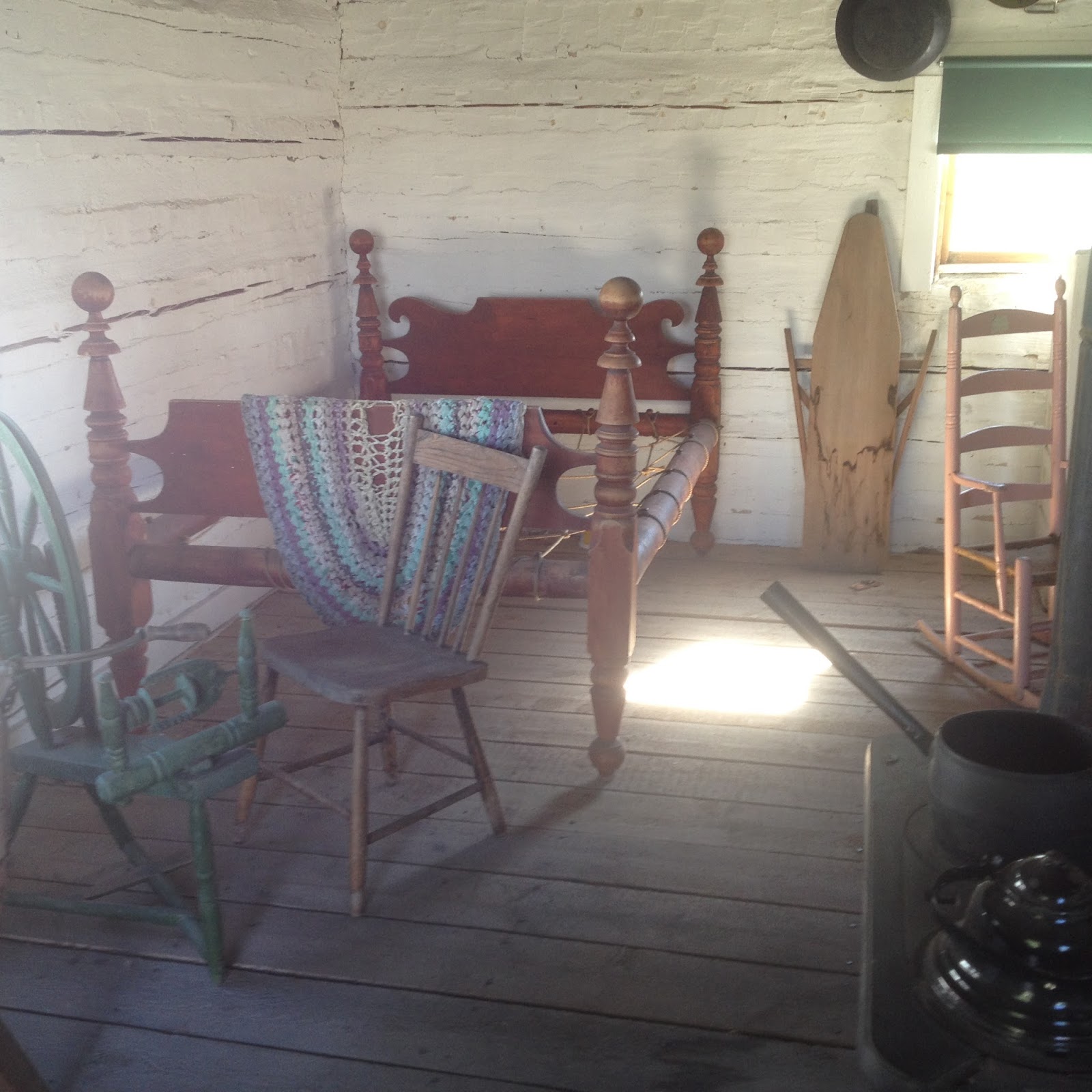
And after school you can go "home" to your one room cabin.


Note the snowshoe hanging by the window and the sled with the pelt attached--more evidence of location. :) 


This last one is for laundry. Looks fun, doesn't it! 

Thanks for joining me today! What is one of your favorite innovations of the last hundred years? 


Friday, February 12, 2016

Research Can Be Fun


For a writer published in contemporary romance and devotionals, I love research and I’ve had some interesting experiences. I do have a historical trilogy based on old family stories in the works, and I’m a pretty good sleuth—shades of the days when Nancy Drew mysteries were my reading preference.

Free family history sites can be treasure troves of information. Two of my favorites are www.DeadFred.com and www.FindAGrave.com. DeadFred is a database of historical photographs, great for assisting with descriptions of characters and period clothing. FindAGrave includes personal stories and the epitaphs can be a story themselves. For historical newspaper research, www.news.google.com/newspapers, http://chroniclingamerica.loc.gov/, and http://fultonhistory.com/ are great resources. Free sites like http://www.libertyellisfoundation.org/, and http://www.castlegarden.org/  give information about immigrants. Revolutionary War and Civil War veterans are located at http://www.dar.org/national-society/genealogy and http://www.nps.gov/civilwar/soldiers-and-sailors-database.htm, and there are many, many more.

In researching my North Dakota roots, a local genealogy society assigned a sweet elderly lady to my case. I asked about the hardware store in the now-ghost town where my great grandparents lived. In the meantime, my mom discovered a photograph of the store’s interior with my great grandfather at the counter. When my research helper asked a neighbor, she discovered he bought the building and moved it. She was standing in what had once been my great grandfather’s store.

While posting queries on genealogy message boards about another great grandfather’s murder, I met some distant cousins who came to visit, despite my husband’s warnings that they might be axe murderers. We located a book by Fredric Remington, the famed western artist and writer that includes sketches of my great grandfather sporting a bandage from being shot in a poker game.

I discovered an 11th great grandfather who was the last man publicly beheaded on Tower Hill in London, a colonel in the War of 1812, two ancestors who served at Valley Forge, and a great uncle who gambled with Billy the Kid. Googling names from an old newspaper article led to finding my great uncle’s fiancée whose mother died in a flu epidemic. When they opened the grave to bury a child with her, there were fingernail marks on the coffin lid.

Research can be exciting when you have the right tools along with tenacity and patience. A personal touch might be just the thing for a sagging story middle and lead to some family fun along the way.


© Copyright by Norma Gail Thurston Holtman, February 9, 2014

Don't forget to leave a comment to get your name in the drawing for an Orphan Train Bride Audiobook by Teresa Ives Lilly! Winner announced in the Weekly Windup on the 15th. Check out all of our great prizes on the Prizes Galore page.

About the author:
Norma Gail is the author of the Christy Award nominated contemporary Christian romance, Land of My Dreams. A women’s Bible study leader for over 21 years, her devotionals and poetry have appeared at ChristianDevotions.us, the Stitches Thru Time blog, and in “The Secret Place.” She is a member of American Christian Fiction Writers, Romance Writers of America, and the New Mexico Christian Novelists. Norma is a former RN who lives in the mountains of New Mexico with her husband of 40 years. They have two adult children.
Connect with Norma:
Book Links:
Lighthouse Publishing of the Carolinas Bookstore: http://store.lpcbooks.com/product/land-of-my-dreams/

Tuesday, January 26, 2016

If These Walls Could Talk - The Sheldon Church of Beaufort

Blogger: Amber Schamel

This past October, my family and I took a trip to North and South Carolina. As a writer, it's always fun to combine book research with vacation. I love Civil War history especially, and a friend of mine recommended that we visit the Sheldon Church ruins while we were there. I'm so glad we did. Nestled among enchanting oak trees and scattered graves, it is a beautiful and somewhat mysterious place.

The church is outside of Beaufort, SC. It was originally known as Prince William's Parish Church. Built between 1745 and 1753, this church was in a beautiful Greek style. It's building was paid for by Lieutenant Governor William Bull, who had a plantation in the area. The plantation was called Sheldon, and so the church is often referred to by that name as well. Lieutenant Governor Bull attended this church, and is buried on its grounds.

When General Augustine Prevost raided the area during the Revolutionary war, the church was partially burned by local loyalists. The people rebuilt the interior and roof of the church in 1825-1826.
Inside the Sheldon Church

Doesn't it look like a fairytale?
As if this historic building hadn't been through enough already, it was also ransacked when General Sherman made his march from Georgia to the Sea. It was dismantled by local freedmen in the years following.

What remains of the Sheldon Church is extraordinary. I truly wish these beautiful brick walls could talk and tell us of all its history. The Revolution, the marriages, the people, church services, funerals, Civil War, and so much more.

There were many graves that were interesting, including Lt. Gov Bull's, Civil War veterans, and some small children, but there was one in particular that caught my eye and became my favorite. I hope you won't think me grotesque for sharing it with you, because it was just so inspiring.

In case you can't read it, here's what it says:
Until the day breaks and the shadows flee away.
Charles Edward

Eldest son of Rev. Charles E.
Mary Maxcy
Leverett

Born at Beauport, S.C.
January 10, 1833
Died December 21, 1861
Aged 28 years

With the full and animated hope that this mortal would put on immortality through faith in the merits of his Redeemer, Jesus Christ. 

Isn't that just the most beautiful thing you've ever seen on a tombstone? This young man was not much older than me when he passed away, probably a victim of the Civil War, but his tombstone inspired me. I would like something similar if I should have to be buried.

Do you enjoy visiting historical places like this? Have you ever found a monument that inspired you?


Amber Schamel writes riveting fiction that brings HIStory to Life. Visit her at www.AmberSchamel.com.

Friday, January 2, 2015

YOU Write the Story! Interactive Survival Adventures

 YOU Write the Story! Interactive Survival Adventures

Blogger: Amber Schamel

Have you ever wished you could make the choices for the characters in the stories you read? If you're like me, you've found yourself yelling "No! Don't do that. That's a really dumb idea." at a printed page or movie screen. What if there was a book that would allow you to make the choices and determine the outcome of the story?

Over the holidays, a friend of mine introduced me to a series of books that does just that. It's the You Choose series from Capstone Press. This series is actually meant for young adults, but I've been enjoying the adventures as well. It's been a real hit with my young siblings and cousins. We've spent hours over the Christmas weekend living the adventures in this series. The series includes adventures in the Revolution, Civil War, Wild West, World Wars, Salem Witch Trials, and many more.

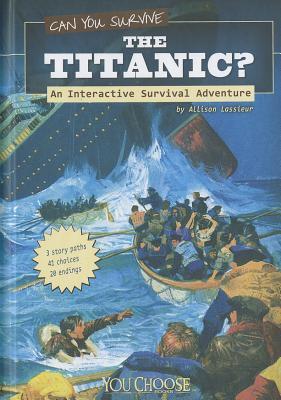
Here's how this works. My favorite so far is Can You Survive the Titanic by Allison Lassieur. In this adventure, you choose to experience the Titanic as a surgeon's assistant, a governess to a first-class family, or as a 12 year old boy traveling in third class to New York with his father. As your story begins, you will be faced with choices, and the choices you make could mean life or death.
https://www.goodreads.com/book/show/11690187-can-you-survive-the-titanic

For example, if you are the governess, you've just finished your dinner and have heard that the ship may be in trouble. You have the choice to either go tell your employer and his family right away, or attempt to find out more before waking them. You make many other choices throughout the story, and each choice changes the plot, and even the outcome. You may save the lives of the three children you care for and become their only living connection, or you may die trying to make sure they made it out of the cabin and to the lifeboats.

This is a really fun way for children to learn about history. Not only that, but the series also helps to paint a vivid picture in the child's mind, showing them that EVERY choice you make is important. Some choices may seem small and unimportant, like choosing to go to the port side or starboard side of the Titanic, but even that small choice determines whether you and your loved ones live or die.

As a writer, these books are a lot of fun, and serve as story fodder.

So, what about you? Do you like to imagine different endings or outcomes to stories? Or do you prefer to have it all written out for you?


Don't forget to leave a comment for your chance to win Max Lucado's Miracle at the Higher Grounds Cafe!

Tuesday, December 2, 2014

Texian Market Days - See the Past Come Alive

Civil War Reenactment
Have you ever felt the noise of a cannon blast? Seen an old-fashioned medicine show? Carded and spun your own cotton? No? Perhaps you've experienced the inside workings of a blacksmith shop? Watched a 1930s-style baseball game? Or wandered through homes from the 1830s, 1860s, 1890s, and 1930s? Can you say you've used an old flat iron, witnessed Cavalry drills, and walked through a chuck-wagon campsite?

If you can't say yes to all of these, perhaps you should visit the Texian Market Days Festival in Richmond, Texas next year. They gave me a taste of each of these and more. (More including the joys of a sunburn. Yep, gotta love Texas in October.)

Howdy, y'all. Crystal here, and I figured I'd share with you a few photos and tidbits from my first trip to the Texian Market Days back in October. I had loads of fun wandering the acres of history.

Here are a few of the homes I got to tour.

This is a picture of the 1830s Jones Stock Farm. It's a dog-run cabin with a kitchen area on the left half, a breezeway in the middle, a family area on the right half, and a loft where the family slept. There were shuttered windows in the loft on each side of the chimneys. (You can't see the chimney on the right side of the cabin thanks to that magnificent tree. :) ) A porch ran the length of both sides of the cabin. I loved the rugged simplicity of this house.
This shot is of the 1860s Ryon Prairie Home. A gorgeous structure with the kitchen and cook's quarters connected to the main house in a dog-run-style fashion. Here, we learned why women didn't sit in chairs with arms while wearing hoop skirts. Can anyone guess why?

I won't leave you hanging. It was because the arms of the chair would tilt that hoop toward the rafters. Can we say awkward? :)


The 1890s Davis Mansion was picturesque to say the least. There was even a stable and carriage house to peruse as well as a green house. The gingerbread trim and picket fence were a nice touch, wouldn't you say?


This sharecropper's cabin was also a portion of the 1890s offerings. Outside the cabin you'd find a simple swing, a barn and chicken coup, and a smoke house.


This picture shows just a section of the 1930s George Cattle Complex. This house was actually built in the 1890s and then upgraded in later years. They added indoor plumbing, electric lights, and even a newfangled dishwasher. Oh, did I mention the elevator? There's a safe under the stairs that can never be removed too. Why? Well, the house settled and the safe is now part of the stairway's stability. :)

The family had one daughter after their son died young. She was spoiled and showered with (um...what's the best word here?) affection. :) Yes, affection. Here's a pic of what her daddy built her.

Now, who wouldn't want a tree house like that? :)


These are just a finite sample of the pictures I took while at the Texian Market Days on the George Ranch Historic Site. I've got a good portion of them on my website if you'd like to see more.


So, what about you? Have you gotten to wander through old houses before? If not, did you have a tree house or other special place your parents built for you to play in?