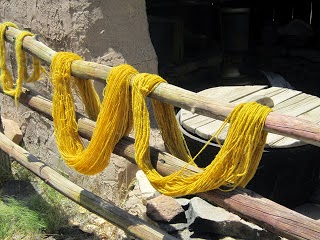
The leaves are used for the dye, which if you're going to give the fiber prep a try from the first post in my nettle series, you'll have the leaves all stripped and ready! As with any dye preparation of natural leaves, you'll want to chop or mash them to release as much of their color as you can. Of course, these are stinging nettles, so gloves are a good idea.
One dyer recommended using an aluminum dye pot for the best color when dyeing with nettles. Typically, dyers prefer to use stainless steel or enamelware pots. The nettles must react favorably with the aluminum in this case.
It's a good idea to mordant the wool first with alum, but not all dyers do. There are multiple internet sites that can show you how to do that.
Plan on about 3x the weight of nettle leaves as yarn or cloth to be dyed. The more leaves, the darker the color. Color will also depend on other factors, like the age of the plant when harvested, the hardness of the water used, and any mordants used. This isn't an exact science when you're using natural resources!
Then you boil the nettle leaves until they are fully cooked and a bit mushy. Strain them well (cheesecloth is a good idea) and cool the liquid. Add the wet yarn or fabric to the cooled dye bath and bring the mixture to a simmer (do not boil) over medium heat. Let simmer until the dye is taken up into the yarn or cloth. Let the dye pot stand and cool completely overnight. Drain and remove the yarn or cloth. Roll in an old towel to remove excess water, then hang or lay flat to dry.
You should wind up with a color varying from gray/green to green/brown.
Another dyer's blog says you can chop the nettle roots and boil with alum to create a dye bath that will give a yellow color. So many uses for this pesky weed!
More in this series:
Exploring Nettles for Fabric
Exploring Nettles for Dinner
Exploring Nettles for Health
One dyer recommended using an aluminum dye pot for the best color when dyeing with nettles. Typically, dyers prefer to use stainless steel or enamelware pots. The nettles must react favorably with the aluminum in this case.
It's a good idea to mordant the wool first with alum, but not all dyers do. There are multiple internet sites that can show you how to do that.
Plan on about 3x the weight of nettle leaves as yarn or cloth to be dyed. The more leaves, the darker the color. Color will also depend on other factors, like the age of the plant when harvested, the hardness of the water used, and any mordants used. This isn't an exact science when you're using natural resources!
Then you boil the nettle leaves until they are fully cooked and a bit mushy. Strain them well (cheesecloth is a good idea) and cool the liquid. Add the wet yarn or fabric to the cooled dye bath and bring the mixture to a simmer (do not boil) over medium heat. Let simmer until the dye is taken up into the yarn or cloth. Let the dye pot stand and cool completely overnight. Drain and remove the yarn or cloth. Roll in an old towel to remove excess water, then hang or lay flat to dry.
You should wind up with a color varying from gray/green to green/brown.
Another dyer's blog says you can chop the nettle roots and boil with alum to create a dye bath that will give a yellow color. So many uses for this pesky weed!
More in this series:
Exploring Nettles for Fabric
Exploring Nettles for Dinner
Exploring Nettles for Health

Pegg Thomas is an author and editor, but also a fiber artist of some *mumble* years. She raises sheep and spins their wool to create one-of-a-kind shawls and other useful items. While she mostly uses a modern-day production spinning wheel, she occasionally spins on a 200-year-old Great Wheel, a true piece of American history.