Showing posts with label Author Linda Shenton Matchett. Show all posts

Tuesday, April 14, 2020

Tuesday Tidbit: Anna Sewell and Black Beauty


Everyone has a favorite childhood book (or two or three…), and for some reason mine seem to revolve around horses. Misty of Chincoteague, My Friend Flicka, and Black Beauty. I was a teenager before I had an opportunity to ride a horse, and the day ended when the animal ran under a tree and swept me off her back. But that’s a story for another day.

In researching this post, I was stunned to discover that the book was published in 1877, almost one hundred years prior to my falling in love with the story. Published shortly before her death, Black Beauty is the only book Anna Sewell wrote. With fifty million copies sold, Black Beauty is considered one of the top ten children’s books, and is the first English novel to be told from the perspective of an animal. Written over the course of six years, Anna became ill before completing the manuscript and dictated much of the text to her mother.

Born March 20, 1820, Anna Sewell was born into a devout Quaker family. Her mother was a successful children’s book author who homeschooled Anna and her brother Philip. Her father owned a small shop that failed, and as a result, the family moved quite a bit in his search for employment. Anna’s maternal grandparents often took care of her and Philip.

When she was a teenager, Anna fell and injured her ankles that never healed properly. She was unable to walk without a crutch or stand for long periods of time. Over the years, she traveled to health spas in Germany and Spain to get relief and healing. However, she was unsuccessful, remaining an invalid for the rest of her life.

As an effort to give herself mobility, she used a horse-drawn chaise to get around. The regular use of the horse combined with living in a society dependent upon horsepower gave Anna pause to think about the humane treatment of animals. She intended the book as an instruction piece for those who worked with horses and other service animals, not as a children’s book.

Anna received one payment of £40 from her publisher, and the book was released on November 24, 1877. She passed away five months later on April 25, 1878.


______________________


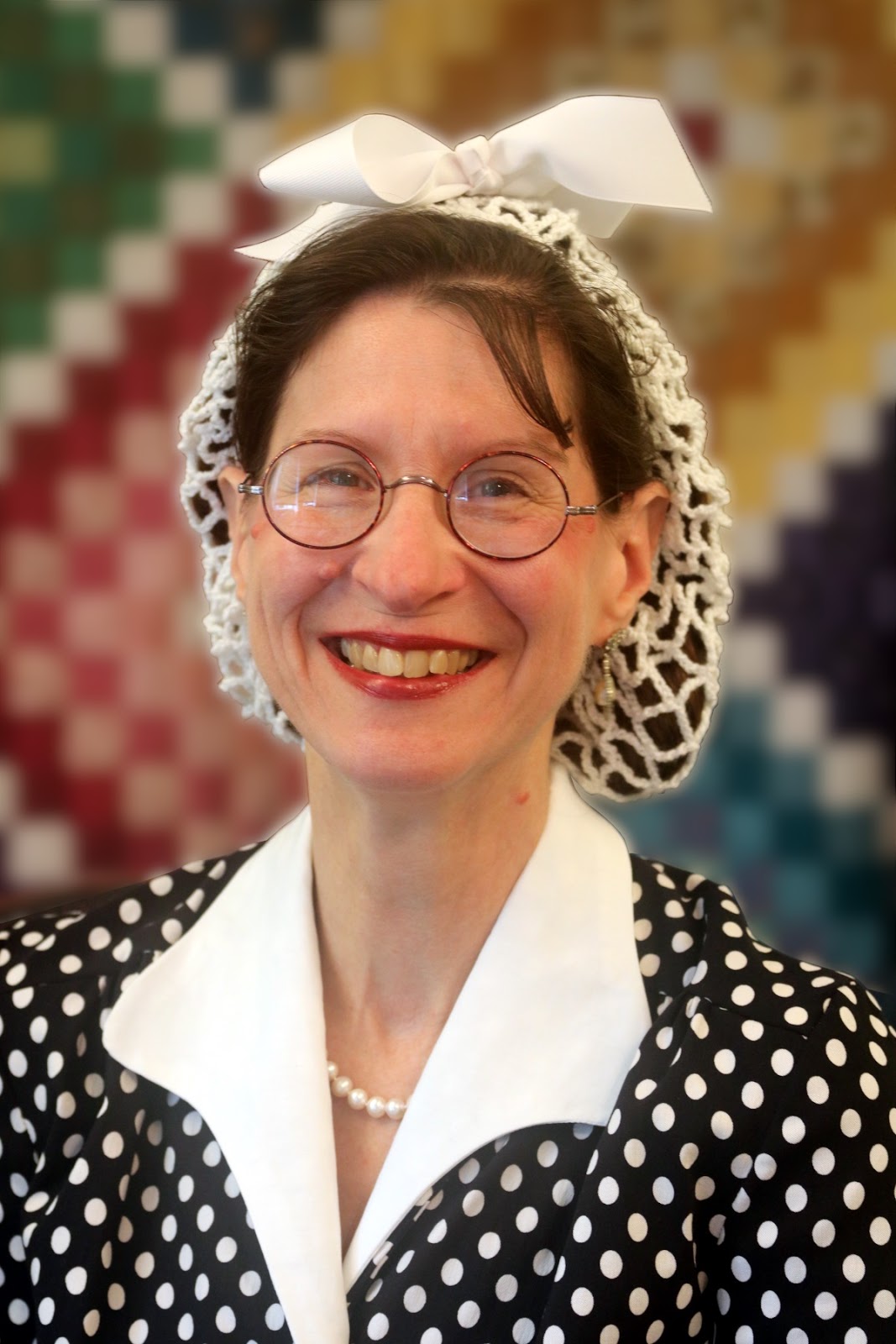
Linda Shenton Matchett writes about ordinary people who did extraordinary things in days gone by. A volunteer docent and archivist for the Wright Museum of WWII, Linda is also a trustee for her local public library. She is a native of Baltimore, Maryland and was born a stone’s throw from Fort McHenry. Linda has lived in historic places all her life, and is now located in central New Hampshire where her favorite activities include exploring historic sites and immersing herself in the imaginary worlds created by other authors. Learn more about Linda and her book on her website or connect with her online: http://www.LindaShentonMatchett.com


Tuesday, January 28, 2020

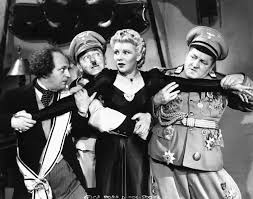
Tidbit Tuesday: The Three Stooges vs. Hitler


Ten months before Charlie Chaplin released The Great Dictator, the Three Stooges came out with You Nazty Spy. Produced by Columbia Pictures in January 1940, the film came out four months after Germany invaded Poland, and nearly a year before the U.S. entered the war.

Comprised of Larry Fine, and brothers Moe and Curly Howard, the Three Stooges began as the vaudeville act “Ted Healy and His Stooges” in 1922. Larry and Moe were the original stooges with the third played by various individuals throughout their fifty-year career. In 1934, the trio signed a contract with Columbia and became wildly popular within their first year. Their movies were typically “shorts,” films less than thirty minutes.

After WWII began, the Stooges (all of whom had Jewish heritage) put out several pieces that poked fun at Hitler and the Nazis, the first being You Nazty Spy with a sequel I’ll Never Heil Again the following year. Moe played “Moe Hailstone,” an Adolf Hitler-like character from Moronica, with Larry playing a Joachim von-Ribbentrop-type ambassador and Curly playing a Hermann Göring character. Consider by most to be the actors’ best film, You Natzy Spy is also the Stooges’ favorite.

In the movie, the evil cabinet ministers overthrow the king and decide to put Moe the new ruler, believing that he’ll be stupid enough to follow their orders. After successfully committing mayhem, the trio is run out of office by a mob and eaten by lions. A bit of a dark ending, but audiences loved it.

You Nazty Spy opens with a disclaimer that reads: “Any resemblance between the characters in this picture and any persons, living or dead, is a miracle.” Was this a Stooge-style eye poke at the censors or an attempt to appease them?

Other wartime movies by the Stooges included They Stooge to Conga, Higher Than a Kite, Back from the Front, Gents without Cents, and No Dough Boys. An anti-Japanese film The Yoke’s On Me was issued in 1944.  

Have you seen any of the Stooges’ wartime films?

___________________
___________________________
Linda Shenton Matchett writes about ordinary people who did extraordinary things in days gone by. Her latest release, Under Ground, features WWII war correspondent, Ruth Brown. A volunteer docent and archivist for the Wright Museum of WWII, Linda is also a trustee for her local public library. She was born a stone’s throw from Fort McHenry and has lived in historic places all her life. Now located in central New Hampshire, Linda’s favorite activities include exploring historic sites and immersing herself in the imaginary worlds created by other authors. Visit her website where she blogs about history, mystery, and faith. Sign up for her newsletter and receive a free short story. You can also connect with Linda on FacebookTwitter, and Pinterest.


Tuesday, January 14, 2020

Tuesday Tidbit: A.A. Milne and Winnie the Pooh


There are probably few people who have never heard of Winnie the Pooh. But did you realize the cuddly little bear’s life began long before he joined Walt Disney’s company of characters?

Alan Alexander Milne was born in the Kilburn area of London on January 18, 1882 (138 years ago!). He attended college on a mathematics scholarship, receiving his BA in the subject in 1903. During his time at school he and his brother collaborated on articles for the student paper and came to the attention of the editors of Punch humor magazine. He became a regular contributor and later an editor for the publication.

His writing career was put on hold during The Great War when he joined the Royal Warwickshire Regiment of the British Army. Injured during the Battle of the Somme, he invalided out then was recruited to write propaganda for MI7, finally being discharged in 1920.

Back at his desk, the next few years were highly productive, and he published eighteen plays and three books. (including one detective novel). The movie industry was just getting started, and Milne became affiliated with Leslie Howard’s company Minerva films, writing four screenplays for the actor/producer.

Life changed personally and professionally for Milne when his son Christopher Robin was born in 1920. The author continued to publish plays, but he now made up stories for his young son, incorporating the boy into the plot lines as well as the youngster’s stuffed animals, including a beloved stuffed bear initially named Edward. The toy was renamed Winnie when a black bear mascot from the First World War was left to the London Zoo.

Winnie first appeared in a poem called Teddy Bear, later republished in When We Were Young. Three more books were published, and Milne’s popularity as an author skyrocketed. He continued to write plays and movie scripts, but Winnie the Pooh’s success overshadow all of this work.

Unfortunately, success came at a price, and the real Christopher Robin resented the limelight, later stating that his father exploited his childhood. The family became estranged. Christopher visited his father occasionally during the last years of the author’s life, but did not see his mother at all in the fifteen years before she died.

After Milne’s death, his widow sold her rights to Stephen Slesinger, an American radio, TV, and film producer who also created comic book characters. Shortly after his death, Slesinger’s widow sold the rights to Walt Disney, and the rest is history.

______________________________________

Linda Shenton Matchett writes about ordinary people who did extraordinary things in days gone by. Her latest release, Under Ground, features WWII war correspondent, Ruth Brown. A volunteer docent and archivist for the Wright Museum of WWII, Linda is also a trustee for her local public library. She was born a stone’s throw from Fort McHenry and has lived in historic places all her life. Now located in central New Hampshire, Linda’s favorite activities include exploring historic sites and immersing herself in the imaginary worlds created by other authors. Visit her website where she blogs about history, mystery, and faith. Sign up for her newsletter and receive a free short story. You can also connect with Linda on Facebook, Twitter, and Pinterest.


Tuesday, November 12, 2019

FDR and His Unprecedented Fourth Term


On November 7, 1944, Franklin D. Roosevelt became the first and only President of the United States to be elected for a fourth term. (Seven years later, the 22ndAmendment to the Constitution would limit the number of times a person could be president to two.) And if FDR’d had his way, Harry S. Truman would not have become the 33rdPresident.

Unlike in 1940 when the Democrats were split about who to nominate, Roosevelt easily won the nomination at the 1944 Democratic convention, making him the first person to serve as a major party nominee in four separate presidential elections. After successful leading the country through the Depression and three years of war, FDR was popular and faced little opposition within his party. Even though the Southern Democrats were unhappy with his racial policies, they were pleased with the amount of war activities and industries to their states, so they agreed with his nomination. Reports indicate there were a few pro-segregationist delegates who tried to get Virginia Senator Harry F. Byrd nominated, but Byrd refused to run.

Henry A. Wallace had been FDR’s Vice President since 1941, but there was significant opposition to putting him forward in the 1944 election. Some felt he was too left-wing and personally eccentric to be next in line for the presidency. Others remembered that he’d performed so poorly as economic coordinator, that Roosevelt had removed him from the post. 

Instead, party leaders introduced Harry Truman as a possible candidate, and after extensive conversations, Roosevelt reluctantly agreed to accept him as his running mate. FDR knew very little about Truman other than that he was a moderate from Missouri, and he’d performed well as chair of a Senate wartime committee investigating fraud and inefficiency in the war program.

Because of Roosevelt’s popularity, the Republicans knew it would be a difficult election to win. Initial nominees under consideration were Wendell Wilkie (the party’s 1940 nominee), Senator Robert Taft of Ohio (son of former president William Taft), and New York Governor Thomas E. Dewey. General Douglas McArthur even made the short list, but realizing he had a war to finish, party leaders didn’t move forward with his nomination. Taft choose not to run and suggested Ohio Governor John W. Bricker. The final pair consisted of Dewey as the Republican Presidential Candidate and Bricker as Vice-president.

Roosevelt won by a landslide, taking thirty-six of the forty-eight states. His decision to make Truman his running mate proved consequential. Roosevelt died in April 1945, and Truman became president on April 12th.


Linda Shenton Matchett is an author, speaker, and history geek. A native of Baltimore, Maryland, she was born a stone's throw from Fort McHenry and has lived in historic places all her life. Linda is a member of ACFW, RWA, and Sisters in Crime. She is a volunteer docent and archivist at the Wright Museum of WWII. To learn more about Linda and her books, including her latest release, Love's Allegiance, visit her website. Receive a free short story when you sign up for her newsletter.

Tuesday, October 8, 2019

Ozzie and Harriet and the Big Band Era


CBS launched the radio program, The Adventures of Ozzie and Harriet in October 1944, having unsuccessfully tried to fill the void left in their program lineup by the loss of Red Skelton to the military in March. Over 400 episodes were produced during its ten-year reign as one of the most popular shows on the air.

However, long before the couple appeared on radio and then television, Ozzie was a band leader. He formed The Ozzie Nelson Band in the late 1920s and had limited success. Some believe his big break came in when he helped himself to discarded issues of the New York Daily Mirror and had band members and their families “stuff the ballot box” with votes for themselves as the newspaper’s favorite band. True or not, in 1930 the band was thrust in the public eye and they became well-known throughout the nation. 

They began to record prolifically with Ozzie as the primary vocalist. By 1935, the band had a number one hit “And Then Some,” and he married the band’s other star vocalist Harried Hilliard. By 1940, the couple had two children, so Ozzie was looking for a way to spend more time with his young family.

Ozzie and Harriet regularly appeared on Red Skelton’s radio program, The Raleigh Cigarette Program. (In those days, shows were often named for the sponsors rather than the stars.) Ozzie came up with the idea to feature his family on the radio and began to write scripts, so when word trickled through the industry that CBS was looking to add a program, Ozzie raised his hand.

Sons David and Ricky were played by actors on the radio program (ages 8 and 4 respectively), but played themselves once the Adventures moved to television in 1949. The radio version continued for another two years. America sat in fascination and listened as Ozzie and Harriet raised their boys on the airwaves. By all accounts, Ozzie was very hands on with producing and directing most of the episode, many of which he also wrote.

Did you know Ozzie and Harriet were part of the Big Band era? 


Here is a clip from one of their performances: https://www.youtube.com/watch?v=-rGctmBJjr0


Linda Shenton Matchett is an author, speaker, and history geek. A native of Baltimore, Maryland, she was born a stone's throw from Fort McHenry and has lived in history places all her life. Linda is a member of ACFW, RWA, and Sisters in Crime. She is a volunteer docent and archivist for the Wright Museum of WWII. To find out more about Linda and her books, including her most recent release Love's Allegiance, visit her website. Receive a free short story when you sign up for her newsletter.

Saturday, September 21, 2019

An Interview with Irwin Terrell of Love’s Allegiance


The history of conscientious objectors in the United States reaches back to the Revolutionary War. At that time, exemptions varied by state. During the Civil War conscientious objection was not part of the draft law for the federal side, but individuals could provide a substitute or pay $300 to hire one. In the Confederacy there were few options: moving to northern states, hiding in the mountains, joining the army but refusing to use a weapon, or being imprisoned. World War I saw little improvement to the handing of COs. In fact, when imprisoned they were often subjected to short rations, solitary confinement, and physical abuse.

Fortunately, World War II provided a better solution. Registrants were sent a questionnaire that included a checkoff to indicate opposition to military service because of religious training or belief. Anyone who marked the box then received a more detailed form on which they had to explain the basis for their objection. The Civilian Public Service provided COs an alternative to military service, and from 1941 to 1947 nearly 12,000 draftees served in this manner.

Meet Irwin Terrell, the hero in Love’s Allegiance who is a member of one of the Peace Churches, and as such, a conscientious objector.

LM: How did your family and neighbors react to your decision to apply for conscientious objector status?

Terrell: My dad is very supportive of my decision. We discussed my choice at length, and even though he doesn’t fully understand my reasoning or agree with it, he said that each man is responsible for his own life. He was adamant that I pray about my decision, which of course, I did. I feel that God led me to make the choice, however I don’t believe He leads everyone in that direction. Unfortunately, my friends are not so understanding, and I've been shunned by those who are still here. Townspeople with family serving overseas are also angry at me. I am alternate avoided and scorned. I have also received veiled threats. 

LM: Tell us about where your assignment during the war.

Terrell: I was assigned through the Civilian Public Service to serve at a mental health hospital. In addition to chores around the property such as maintenance and landscaping, I am responsible for attending to the men. I work six days a week and help the patients with self-care as well as occupation and physical therapy. We are hoping to help as many as possible to become self-sufficient.

LM: What are some of the other opportunities for COs to serve, and why didn’t you volunteer for one of them?

Terrell: The U.S. Forest and U.S. Park Services offered positions to help with forest and park maintenance. Even though I’m used to working outside on the farm, I wanted to do something different. There are also a number of experiments being performed in medical schools around the U.S. on men in an effort of discover cures for diseases such as typhus, infectious hepatitis, and malaria because our troops are exposed to these terrible ailments.

LM: Do you feel that taking up arms is wrong across the board or just for you?

Terrell:  Like my dad, I feel that each man must make the decision that is right for him. Unfortunately, we live in a sinful world and sometimes war becomes the only answer to overcoming evil.

LM: What is your favorite part of your job?

Terrell: I’m responsible for the gardens at the hospital. I have a cadre of patients who I work with. Seeing the joy as well as the understanding on their faces as they learn how to plant, maintain, and harvest the crops is gratifying. It is a step toward independence for them.

LM: What are your plans for after the war?

Terrell: My work at the hospital has spurred an interest in continuing to work in the mental health field. I’m not sure where God will lead me, but I believe it will be to minister to others in some way.

LM: I understand there is some possible romance in your life too. What can you tell us about that?

Terrell: You’re talking about Rochelle. My father thinks I have waited too long to marry, so he…uh…decided to give me some help. He contacted a distant cousin of his and they agreed to have her come work for him so we could explore a possible marriage. You’ll have to read how things turn out!

About Love’s Allegiance:
With most U.S. boys fighting for Uncle Sam in far off countries, Rochelle Addams has given up hope for a wedding in her future. Then she receives an intriguing offer from a distant relative to consider a marriage of convenience.

Conscientious objector Irwin Terrell is looking forward to his assignment at Shady Hills Mental hospital to minister to the less fortunate in lieu of bearing arms. At the arrival of the potential bride his father has selected for him, Irwin’s well-ordered life is turned upside down. And after being left at the altar two years ago, he has no interest in risking romance again.

Despite his best efforts to remain aloof to Rochelle, Irwin is drawn to the enigmatic and beautiful young woman, but will time run out before his wounded heart can find room for her?

Inspired by the biblical love story of Rebekkah and Isaac, Love’s Allegiance explores the struggles and sacrifices of those whose beliefs were at odds with a world at war.

Purchase Link: https://amzn.to/2ZXb9JQ


About Linda Shenton Matchett: Linda is an author, speaker, and history geek. A native of Baltimore, Maryland, she was born a stone’s throw from Fort McHenry (of Star Spangled Banner fame) and has lived in historic places all her life. Linda is a member of ACFW, RWA, and Sisters in Crime. She is a volunteer docent and archivist at the Wright Museum of WWII. Find out more about Linda and her books at http://www.LindaShentonMatchett.com. Pick up a free book when you sign up for her newsletter.

Tuesday, September 10, 2019

The Great Atlantic Hurricane of 1944


Over the course of human history, war has often been affected by the weather, and WWII did not escaped unscathed. The winter of 1941-42 had a major impact on troops after Germany invaded Russia. The invasion of Normandy was delayed because the forecast indicated poor weather which could have created overwhelming swells. Sweltering heat and humidity provided abysmal conditions for troops fighting in the tropics. The list could go on.

But perhaps no weather is as dangerous as a hurricane, and one was developing two hundred and fifty miles north of Puerto Rico in September 1944.

The military needed to know just how bad the conditions were going to be, so on September 9th, they sent an Army Air Force plane into the path of what would later become known as the Great Atlantic Hurricane. The craft encountered tremendous turbulence, and the weather officer onboard estimated wind speeds of 140 mph. Several times during the flight, the pilot and co-pilot lost control of the airplane, but fortunately, they landed safely. Later it was discovered that over 150 rivets had been sheared from just one of the wings.

Because of the foreknowledge about the storm, the government was able to provide warnings to the general public, so there was very little loss of life on land. The same could not be said for the sea. 

In Massachusetts, the lightship Vineyard was berthed in the entrance of Buzzards Bay and Vineyard Sound. The warrant officer in charge of monitoring the weather did not like what he saw and requested permission to move the ship to a more sheltered location. His request was denied, and the craft was later found sunk in eighty feet of water over a mile and a half from its original location. All hands were lost.

Over the course of seven days, the storm wreaked havoc on military shipping and sunk four ships: the destroyer USS Warrington, two Coast Guard cutters, and a mind sweeper. A total of nearly 400 sailors died.

Because of its ferocity, the hurricane drew many comparisons to the “Long Island Express” that ran roughshod over the mid-Atlantic just six years earlier. Crop and structure loss were extensive, and damage is estimated at $100 million. 


Today’s technology can detect infinitesimal changes in weather, and make predictions, but weather still has a mind of its own, and nothing is guaranteed.

I remember the Blizzard of 1978. What is the worse weather you’ve experienced?


Linda Shenton Matchett is an author, speaker, and history geek. A native of Baltimore, Maryland, she was born a stone's throw from Fort McHenry and has lived in historic places all her life. Linda is a member of ACFW, RWA, and Sisters in Crime. She is a volunteer docent and archivist for the Wright Museum of WWII. To find out more about Linda and her books, including her latest, Love's Allegiance, visit her website. Receive a free short story when you sign up for her newsletter.

Tuesday, May 14, 2019

Tuesday Tidbit: The Rosenstrasse Protest


“What if” is the crux of just about every story line created by an author. Historians sometimes explore the same question. What if the outcome of The Battle of the Bulge had been different? What if Julius Caesar hadn’t been assassinated? What if Thomas Dewey did or didn’t get elected? You get the picture.

The Rosenstrasse (Rose Street) incident, included in my latest release, Love’s Belief, occurred in Berlin, Germany during February and March 1943, and is one such moment in history that scholars ruminate over the outcome.

In 1935, the Nuremburg Laws were put into place in an effort to “protect German Blood and German Honour.” One of the associated mandates forbid marriage between Jewish and non-Jewish citizens, however, a later law protected those already married. As Hitler’s reign continued, more and more Jews were arrested, deported, and transported to labor and death camps. In Berlin, several hundred Jewish men married to Gentile women remained.

Eager to handle the “Jewish Question” and rid Germany, especially Berlin, of Jews, the Gestapo decided to circumvent the protection order and began to arrest Jews on various charges, including “impudence.” Most of those charged were men, and they were taken to a facility on Rosenstrasse where they were processed and held. Their wives immediately sprang into action and congregated outside the building where they indicated they would stay until their husbands were released.

Days went by with the soldiers sometimes threatening to shoot the protesters. News of the incident filter outside of Germany, and reports began to show up in newspapers around the globe. Realizing that he could neither shoot the women in cold blood which might cause further protests around the country, Goebbels released the prisoners during the first week in March, 1943.

German scholar Konrad Kwiet said of the protest, “the successful outcome of this late protest suggests that if similar actions at an earlier stage had been carried out throughout Germany, they might have halted the increasingly destructive course of the German anti-Jewish policy.” Do you agree with him?

___________________________________

About Loves’ Belief:
Midwife Pia Hertz and her mother Sabine have been delivering babies long before the Nazis came to power. Now, the Third Reich has implemented mandates that require Jewish babies and other “undesirables” to be killed as part of The Final Solution. Is Pia’s new faith in Christ strong enough to defy the laws of man?

Despite the agony of the injury at the Battle of Drøbak Sound that took his arm, Dieter Fertig is relieved he’s no longer part of Hitler’s army. He returns to Berlin and discovers Jews are being deported by the thousands. When he realizes the Nuremburg Laws require his best friend’s baby girl to be killed, he must find a way to spirit the child out of Germany before the Nazis discover her existence. 

Inspired by the biblical story of Shiprah and Puah, the midwives who saved Jewish babies during Pharaoh’s reign, Love’s Belief shows how one person’s actions can change the world.

Purchase Link: https://amzn.to/2LNe2pI


Linda Shenton Matchett is an author, speaker and history geek. A native of Baltimore, Maryland, she was born a stone’s throw from Fort McHenry and has lived in historic places all her life. Linda is a member of ACFW, RWA, and Sisters in Crime. She is a volunteer docent and archivist for the Wright Museum of WWII. To find out more about Linda and her books, including her latest release, Love’s Belief, visit http://www.LindaShentonMatchett.com. Receive a free short story when you sign up for her newsletter.


Tuesday, April 9, 2019

Operation Manna


Unlike Operation Carpetbagger that dropped weapons and materiel behind French lines, (See post here), Operation Manna was a series of humanitarian missions that delivered nearly 7,000 tons of food to the Netherlands over the course of ten days.

The Hongerwinter was a major famine that occurred in the Netherlands from November 1944 until liberation on May 5, 1945. The Nazi-occupied western portion of the country was particularly hit hard, and countrywide more than 20,000 people died of starvation, and approximately 4.5 million were affected by the direct and indirect consequences of the famine. In addition to an exceptionally harsh winter, bad crops, and four years of war, the Nazis imposed an embargo on food transport in September 1944 in retaliation for the exiled Dutch government supporting the Allies in liberating southern parts of the Netherlands.

The population was forced to live on 400-800 calories per day, most of them eating grass, sugar beets, and tulip bulbs. Several testimonies talk about the bitter taste of the bulbs. One anecdote tells about a young woman who managed to find some potatoes, but was robbed of them by a policeman on her way home.

On April 29, 1945, the first RAF plane, nicknamed “Bad Penny” (as in “a bad penny always turns up”) took off in bad weather before the Germans had agreed to a ceasefire. In order to safely release the food parcels, the aircraft had to fly at an altitude of fifty feet. Tinned and dried food as well as chocolate made up the packages. The initial flight succeeded, and Operation Manna commenced in full force, flying 3,301 sorties to four drop zones where people collected and distributed the parcels.

Notification of the missions came through BBC radio, and fortunately many of the Dutch citizens made a habit of breaking the law and listening to broadcasts! Here are a few memories:

“There are no words to describe the emotions experienced on that Sunday afternoon. More than 300 four-engined Lancasters, flying exceptionally low, suddenly filled the western horizon. A marvelous sight. What a feast. Everyone is excited with joy.” Diary entry of seventeen-year-old Arie de Jong.

“At first we were terrified because they were dropping bombs, but news traveled fast that they were dropping food…Everybody danced and screamed. Some people took out their hidden flags and waved them at the aircraft. My mum almost fainted because she was weak from hunger.” Anonymous Dutch citizen.

“People were everywhere…on the streets, on the roofs, leaning out of windows. They all had something to wave with; a handkerchief, a sheet…it was incredible.” Sgt. Ken Wood, rear gunner.

In Rotterdam, at the exact spot of one the drop zones, a monument was erected in 2006 that symbolizes the belly of an allied bomber filled with food parcels. Students at a local elementary school took on responsibility to maintain the site.


Linda Shenton Matchett is an author, speaker, and history geek. A native of Baltimore, Maryland, she was born a stone's throw from Fort McHenry and has lived in historic places all her life. Linda is a member of ACFW, RWA, and Sisters in Crime. She is a volunteer docent and archivist for the Wright Museum of WWII and a trustee for her local public library. To learn more about Linda and her books visit her website. Receive a free short story, Love's Bloom, just for signing up for her newsletter. Linda can be found on FacebookTwitter, and Pinterest.