Showing posts with label Tidbit Tuesday. Show all posts

Tuesday, April 21, 2020

One City's Pandemic


My Great Aunt Ella died in 1918. I have never found a death certificate for her. She died in the Spanish influenza pandemic. More than 350 people died in Milwaukee (Wisconsin). Apparently, record keeping was also a casualty.

When Ella died, she left a year-old son, who became my godfather.

The flu first struck sailors at the Great Lakes Naval Training Station north of Chicago on September 11. Within a week, 2,600 men were ill, but furloughs were still being granted. It didn’t take long for the disease to spread to Milwaukee.
By September 21, the number of sick in Milwaukee had risen to 100. Two days later, the first death occurred. The city health commissioner encouraged everyone to avoid crowds and practice personal care, such as avoiding kissing and handshakes.
War raged in Europe, and the Fourth Liberty Loan Drive was scheduled that month. Milwaukeeans ignored the no-crowd warning and staged a massive parade on the 28th. The flu found a foothold and took off.
The city’s hospitals were taxed beyond capacity. Compounding matters, most able-bodied physicians were away in military service. The Milwaukee Auditorium was quickly converted into a temporary isolation hospital.
The health commissioner adopted extreme measures. All theaters, movie houses, and dance halls were closed until further notice. The Milwaukee Sentinel estimated the seven theaters and 68 motion picture houses lost $120,000 of daily admissions, depriving the government of $18,000 daily in war taxes.
More closures came. Bowling alleys and billiard halls, football games and boxing matches, political meetings and department store sales were all banned. Anyone violating the orders could be fined up to $100 a day. If they didn’t pay the fine, they could be imprisoned.
Churches and saloons were closed with certain exceptions. Only near relatives could attend weddings and funerals. The churches were open for private prayer as long as there were no large crowds. Assembling in saloons was also not allowed. Customers came in, bought a drink, and left.
Health care workers and caregivers wore themselves out. Several nurses died. Idled teachers went door-to-door, and created an accurate count of the sick. Six thousand official cases were reported, but the commission estimated the actual count as high as 30,000.
The 1918 pandemic infected over 500 million people worldwide, and killed between 20-50 million, more than all the soldiers and civilians killed in World War I.
Today we are in another pandemic. Like the Spanish Influenza, this too will pass.

Terri Wangard writes novels that entertain and enlighten. She is a member of American Christian Fiction Writers (ACFW), and has won and been a finalist in various writing contests. Her latest book, Roll Back the Clouds, featuring the Lusitania, released last month. When not writing, she’s likely to be reading. Learn more at www.terriwangard.com

Tuesday, March 17, 2020

It’s Women’s History Month By Shirley Raye Redmond


Shirley here. Godly women are light and salt in our world. As March is Women’s
History Month, I thought it might be fun to offer a multiple choice quiz
to test your WHQ—women’s history quotient. The answers are provided
at the end of the quiz. Good luck!

(1) Who was the first licensed female watchmaker in the
Netherlands?
(A) Greta Brinker
(B) Corrie Ten Boom
(C) Maria Van Dyke

(2) Who was the first pilot to ever fly for the Missionary Aviation
Fellowship—yes, the pilot was a woman!
(A) Amelia Earheart
(B) Elizabeth Greene
(C) Beryl Markham

(3) Who was the most prolific female hymn writer of all time? Hint:
She was blind from infancy.
(A) Katherine Anne Porter
(B) Fanny Crosby
(C) Katherine Lee Bates

(4) Who opened the first orphanage for African American children
in 1899 near Chicago:
(A) Jane Addams
(B) Amanda Smith
(C) Harriet Beecher Stowe

(5) Pastor Alexander Whitaker taught her to read the Bible and
speak English. When baptized she took the name Rebecca and
married an English widower named John Rolfe. Who was she?
(A) Tucumcari
(B) Pocahontas
(C) Kateri

(6) One of the fastest runners in the world, she won three Olympic
gold medals. Hard to believe she was crippled with polio when
she was a baby. Who was she?
(A) Babe Didrickson
(B)
(C) Wilma Rudolph
(D) Tamika Catchings Smith

(7) As a lighthouse keeper in Rhode Island, she saved more than a
dozen men from drowning during her amazing career. She
received many honors and awards, including a visit from
President Ulyssess Grant who came to thank her personally for
her dedication to the United States Lighthouse Service. Who
was she?
(A) Jane Austen
(B) Ida Lewis
(C) Louisa May Alcott

Answers: The correct answer for each question is letter B. You can
learn more about these amazing women and others like them in my latest
book, Courageous World Changers: 50 True Stories of Daring Women
of God.

Women of Fearless Faith

Meet women who have used their God-given talents to live out their faith to the fullest. They come from a variety of backgrounds, eras, and ethnicities, but each one has answered the Lord’s call on their life in bold and innovative ways.

Children of all ages will be inspired by the stories of
  • Corrie ten Boom—activist, author, and Holocaust survivor
  • Laurie Hernandez—gymnast who won both gold and silver medals in her sport
  • Florence Nightingale—health care reformer
  • Madeline L’Engle—author of children’s literature
  • Mother Teresa—missionary and winner of the Nobel Peace Prize
These and the 45 other female spiritual role models featured in this book have made a profound impact on the world around them, and in many cases changed the course of history. Strong, smart, and sometimes outspoken, these women are tremendous examples of God’s love in action.

These inspiring profiles will captivate kids’ imaginations and encourage them to discover their own gifts and how they can use them to glorify God.               


An award-winning writer and frequent conference speaker, Shirley Raye Redmond is the author of Courageous World Changers: 50 True Stories of Daring Women of God (Harvest House). She holds an M.A. in literature and has been married to her husband Bill for over forty years. They live in New Mexico where she is prayer chairman for her local Community Bible Study (CBS). Touch base at shirleyrayeredmond.com or Facebook.

Tuesday, February 25, 2020

Tidbit Tuesday: 15th Amendment


How familiar are you with the U.S. Constitution? How about the Bill of Rights? The other amendments? There is so much history to the United States, teachers must have a tough time trying to present the vast amount of information to students.

My current work-in-progress, Dinah’s Dilemma, takes place in the American west during 1870. Life was vastly different one hundred and fifty years ago. Electricity had been invented by that time, but it wouldn’t be until 1882 that parts of Manhattan saw electricity introduced in houses. Gas light and candles would remain popular for another fifty years. Inventions during 1870 included the bee smoker, the rotary can opener, and the feather duster.

More importantly, that year also saw a great change with the passage of the 15th Amendment. Ratified on February 3rd, the law states that the “right of citizens of the United States to vote shall not be denied or abridged by the United States or by any state on account of race, color, or previous condition of servitude.”

Having been freed by the 13th Amendment and granted citizenship by the 14th Amendment, African Americans men must have been thrilled to receive the privilege of the right to vote. (Remember, women of any color were unable to vote until the 19th Amendment was passed in 1920) Unfortunately, poll taxes, literacy tests, and “grandfather clauses” that excluded anyone whose ancestors hadn’t voted in the 1860s were just a few of the ways used to disenfranchise the men. Social and economic segregation added to the problem.

Not until the Voting Act of 1965, passed in March of that year, would deterrents to exercising the right to vote be abolished.

What was the first election during which you were old enough to vote?


____________________________


Linda Shenton Matchett writes about ordinary people who did extraordinary things in days gone by. Her latest release, Under Cover, features WWII war correspondent, Ruth Brown. A volunteer docent and archivist for the Wright Museum of WWII, Linda is also a trustee for her local public library. She was born a stone’s throw from Fort McHenry and has lived in historic places all her life. Now located in central New Hampshire, Linda’s favorite activities include exploring historic sites and immersing herself in the imaginary worlds created by other authors. Visit her website where she blogs about history, mystery, and faith. Sign up for her newsletter and receive a free short story. You can also connect with Linda on FacebookTwitter, and Pinterest.

Tuesday, February 11, 2020

Tidbit Tuesday: Laura Ingalls Wilder and The Little House Books


When I was growing up, my family often watched television together, enjoying such shows as The Waltons and Little House on the Prairie. It was not until I was an adult that I realized Little House was based on children’s books written by Laura Ingalls Wilder who was born 153 years ago this month. The first book was published in 1932 when Laura was 64 years old!

Born in Pepin, Wisconsin, Laura was the second of five children. Her family were descendants of the Delano family, the ancestral family of President Franklin Delano Roosevelt whose policies and programs she would later criticize. She was also third cousin, once removed, of President Ulysses S. Grant.

When Laura was two years old, her parents moved with her to a settlement near modern day Independence, Kansas, but the family was forced to move less than a year later because their homestead was on the Osage Indian reservation and not open to white settlers. Their home in Wisconsin reverted back to them because the buyer failed to pay the mortgage. Three years later, the Ingalls’s began a series of moves that took them to Kansas, Minnesota, Wisconsin, Iowa, and South Dakota where the family purchased a homestead in De Smet.

At the age of sixteen, Laura became the local school teacher to help with the family finances. Two year later, she quit to marry Almanzo Wilder, a farmer, ten years her senior. Initially prosperous the couple suffered a number of incidents during the first few year of their married life that created financial problems: Almanzo contracted diphtheria that left him partially paralyzed, two fires that cost them their home, barn, and supply of hay and grain, and several years of drought.

In 1894, the Wilder’s moved to Mansfield, Missouri where they purchase a property they named Rocky Ridge Farm. Learning from their earlier mistake of producing only one crop, the couple diversified with poultry, an apple orchard, and dairy cows. Laura became a local expert on farming and began giving talks around the area. In 1911, she was approached to write a regular column for the Missouri Ruralist, a job she would keep for more than a decade.

Then the stock market crash of 1929 occurred, and Laura and Almanzo lost everything they had. At the encouragement of her daughter, Laura wrote her autobiography and made several attempt to sell it to a publisher. Unsuccessful, she wrote fictionalized versions of her life geared toward children. The first book Little House in the Big Woods became an instant success, and Laura went on to write seven more, giving the family the stable income they sorely needed after the crash.

Laura passed away three days after her ninetieth birthday in 1957. 

Did you read or watch the Little House?
_________________________


Linda Shenton Matchett writes about ordinary people who did extraordinary things in days gone by. Her latest release, Under Cover, features WWII war correspondent, Ruth Brown. A volunteer docent and archivist for the Wright Museum of WWII, Linda is also a trustee for her local public library. She was born a stone’s throw from Fort McHenry and has lived in historic places all her life. Now located in central New Hampshire, Linda’s favorite activities include exploring historic sites and immersing herself in the imaginary worlds created by other authors. Visit her website where she blogs about history, mystery, and faith. Sign up for her newsletter and receive a free short story. You can also connect with Linda on FacebookTwitter, and Pinterest.

Tuesday, January 21, 2020

Hello Girls


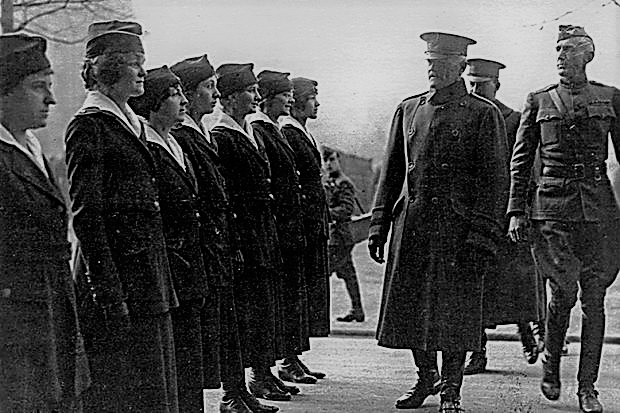
In my fourth book, Wheresoever They May Be, Susan Talbot is a switchboard operator in the Women’s Army Corps. World War II was not the first time women served in that role. During World War I, the “Hello Girls” filled that urgent need in France.
These American women were part of the U.S. Army Signal Corps. They were fluent in English and French. A total of 223 were trained by AT & T before sailing for Europe.
Men disdained the “women’s work” job, and they weren’t as good at it. They took as long as sixty seconds to connect calls. The women could accomplish the task in ten seconds.
According to author Elizabeth Cobbs, “every command to advance or retreat or hold fire was delivered by telephone and it took an operator to connect that call.”
The American women connected calls for French officers needing to communicate with American officers, and they stayed on the line to translate for the men. They served near the front, in danger of bombardment, and knew military secrets.

General Pershing inspects the Hello Girls

After the war, the women tried to join service organizations, which required their Army discharge papers. The army told them they were civilian contractors, and were ineligible for the bonuses paid to all members of the armed forces. Not until 1977 was legislation signed, recognizing them as veterans. By then, most had passed on.

Terri Wangard writes novels that entertain and enlighten. She is a member of American Christian Fiction Writers (ACFW), and has won and been a finalist in various writing contests. When not writing, she’s likely to be reading. Learn more at www.terriwangard.com


Tuesday, January 14, 2020

Tuesday Tidbit: A.A. Milne and Winnie the Pooh


There are probably few people who have never heard of Winnie the Pooh. But did you realize the cuddly little bear’s life began long before he joined Walt Disney’s company of characters?

Alan Alexander Milne was born in the Kilburn area of London on January 18, 1882 (138 years ago!). He attended college on a mathematics scholarship, receiving his BA in the subject in 1903. During his time at school he and his brother collaborated on articles for the student paper and came to the attention of the editors of Punch humor magazine. He became a regular contributor and later an editor for the publication.

His writing career was put on hold during The Great War when he joined the Royal Warwickshire Regiment of the British Army. Injured during the Battle of the Somme, he invalided out then was recruited to write propaganda for MI7, finally being discharged in 1920.

Back at his desk, the next few years were highly productive, and he published eighteen plays and three books. (including one detective novel). The movie industry was just getting started, and Milne became affiliated with Leslie Howard’s company Minerva films, writing four screenplays for the actor/producer.

Life changed personally and professionally for Milne when his son Christopher Robin was born in 1920. The author continued to publish plays, but he now made up stories for his young son, incorporating the boy into the plot lines as well as the youngster’s stuffed animals, including a beloved stuffed bear initially named Edward. The toy was renamed Winnie when a black bear mascot from the First World War was left to the London Zoo.

Winnie first appeared in a poem called Teddy Bear, later republished in When We Were Young. Three more books were published, and Milne’s popularity as an author skyrocketed. He continued to write plays and movie scripts, but Winnie the Pooh’s success overshadow all of this work.

Unfortunately, success came at a price, and the real Christopher Robin resented the limelight, later stating that his father exploited his childhood. The family became estranged. Christopher visited his father occasionally during the last years of the author’s life, but did not see his mother at all in the fifteen years before she died.

After Milne’s death, his widow sold her rights to Stephen Slesinger, an American radio, TV, and film producer who also created comic book characters. Shortly after his death, Slesinger’s widow sold the rights to Walt Disney, and the rest is history.

______________________________________

Linda Shenton Matchett writes about ordinary people who did extraordinary things in days gone by. Her latest release, Under Ground, features WWII war correspondent, Ruth Brown. A volunteer docent and archivist for the Wright Museum of WWII, Linda is also a trustee for her local public library. She was born a stone’s throw from Fort McHenry and has lived in historic places all her life. Now located in central New Hampshire, Linda’s favorite activities include exploring historic sites and immersing herself in the imaginary worlds created by other authors. Visit her website where she blogs about history, mystery, and faith. Sign up for her newsletter and receive a free short story. You can also connect with Linda on Facebook, Twitter, and Pinterest.


Tuesday, January 7, 2020

Courageous World Changers, book review


Courageous World Changers By Shirley Raye Redmond: Meet women who have used their God-given talents to live out their faith to the fullest. They come from a variety of backgrounds, eras, and ethnicities, but each one has answered the Lord’s call on their life in bold and innovative ways.

Children of all ages will be inspired by the stories of
·         Corrie ten Boom—activist, author, and Holocaust survivor
·         Laurie Hernandez—gymnast who won both gold and silver medals in her sport
·         Florence Nightingale—health care reformer
·         Madeline L’Engle—author of children’s literature
·         Mother Teresa—missionary and winner of the Nobel Peace Prize


These and the 45 other female spiritual role models featured in this book have made a profound impact on the world around them, and in many cases changed the course of history. Strong, smart, and sometimes outspoken, these women are tremendous examples of God’s love in action.

These inspiring profiles will captivate kids’ imaginations and encourage them to discover their own gifts and how they can use them to glorify God.

Heidi here. In a day where young girls are being told they can be anything, do anything, don't let their gender rule them, Courageous World Changers by Shirley Raye Redmond is a breath of fresh air. These are women who were courageous with God as their focus.

Though there are some women you will recognize in this book, some are obscure women I've only vaguely heard of. And who doesn't like to learn a little now and again?

I specifically liked the quote from Mahalia Jackson, "Faith and prayer are the vitamins of the soul; man cannot live in health without them." Gabby Douglas' story was inspiring, ending with "All the glory goes to God." Condoleezza Rice, influential political adviser, says "faith and reason are not enemies of one another, that indeed we are called to love the Lord our God with our hearts and our minds."

I received this book free from the publisher and the author. I was not required to write a positive review. The opinions I have expressed are my own.

Grab your copy of Courageous World Changers by Shirley Raye Redmond today!

Tuesday, August 20, 2019

A Woman of Conviction


In 1916, Jeannette Rankin was the first woman elected to Congress as a Republican from Montana. Born in 1880, she became a suffragette and professional lobbyist for the National American Woman Suffrage Association. Her efforts helped win Montana women the vote in 1914. The first opportunity for Montana women to vote came when Jeannette ran for Congress. In victory, she said, “I am deeply conscious of the responsibility resting upon me.”
Not only a suffragette, she was a pacifist. She made no secret of how she felt about the war raging in Europe. “If they are going to have war, they ought to take the old men and leave the young to propagate the race.”
Colleagues in the suffrage movement didn’t want her to vote no, fearing she would tarnish their cause. That didn’t sway her. “I want to stand by my country, but I cannot vote for war. I vote no.” The National American Woman Suffrage Association announced she hadn’t voted for the suffragists, “she represents Montana.”


After serving one term, she worked for pacifism, social welfare (she had worked for a time as a social worker before Congress), and women’s causes for peace. With another war looming in 1940, she again ran for Congress, saying, “No one will pay any attention to me this time. There is nothing unusual about a woman being elected.”
With the attack on Pearl Harbor, the House and Senate met to deliberate on declaring war. She wanted to speak, but Speaker Sam Rayburn refused to recognize her, calling her out of order for her efforts. Some members asked her to either vote for war or abstain. Her vote of no met with hisses and boos.
“As a woman, I can’t go to war, and I refuse to send anyone else,” she declared. Hers was the only vote against war, 388 to 1.
Her brother who financed her campaigns wired, “Montana is 100 percent against you.” Colleagues and reporters ignored her for the rest of her term, and she did not run for re-election.
Would you have had the courage of your convictions to stand firm while everyone else railed against you?


Terri Wangard writes novels that entertain and enlighten. She is a member of American Christian Fiction Writers (ACFW) has won and been a finalist in various writing contests. When not writing, she’s likely to be reading. Her four novels have all been set in World War II, but her recently published novella, Where My Heart Resides, is a contemporary romance. Learn more at www.terriwangard.com

Tuesday, May 7, 2019

Tidbit Tuesday: Gaslight - Seventy-five Years Later


As with many Hollywood films, George Cukor’s 1944 movie Gaslight, released seventy-five years ago this month, is a remake of a play. However, unknown to many Americans, his version is not the first remake. Originally written by Patrick Hamilton in 1938, the play Gas Light was highly successful and caught the eye of British filmmakers who purchased the rights. Directed by Thorold Dickinson and released in 1940, the movie also did well.

Full of well-known stars, MGM’s Gaslight also featured newcomer Angela Lansbury, who at seventeen years old had to be accompanied on set by a social worker. Filming of a scene in which she smokes a cigarette was not done until she turned eighteen. Lansbury received an Oscar nomination for Best Supporting Actress for her performance. Ingrid Bergman and Charles Boyer are the headliners in the film and received high praise from critics. Bergman won an Oscar for her role.

Gaslighting is a term that describes a type of psychological abuse in which the victim is manipulated into doubting his or her sanity. The plot revolves around Boyer’s character subjecting Bergman’s character to gaslighting in order to get his hands on valuable jewelry.

Critic Emanuel Levy makes an interesting observation that the film is one in a long line of 1940s movies that center on “don’t trust your husband.” Beginning with three Hitchcock movies (Rebecca, Suspicion, and Shadow of a Doubt), the cycle continues with Gaslight, Jane Eyre, Dragonwyck, Notorious, and the Spiral Staircase, just to name few. The 1964 movie Hush, Sweet Charlotte also uses gaslighting as a plot device.

Released during the last year of WWII when America’s nerves were stretched thin, Gaslight’s creepy, suspenseful flavor struck a chord with audiences and was a box office hit.

Have you seen Gaslight?
_____________________________________


Linda Shenton Matchett  is an author, speaker, and history geek. A native of Baltimore, Maryland, she was born a stone’s throw from Fort McHenry and has lived in historic places all her life. Linda is a member of ACFW, RWA, and Sisters in Crime. She is a volunteer docent and archivist for the Wright Museum of WWII and a trustee for her local public library. Learn more about Linda and her books at http://www.LindaShentonMatchett.com.

Tuesday, April 16, 2019

Sunday Drive in the Country

My next release, coming April 20th, is set in 1888 where I grew up. The countryside of my childhood--dirt roads snaking through thick woods of pines, oaks, and cedars, wild blackberry bushes and plum trees. Hidden along the way were decaying barns and farm houses that invigorated my imagination.

Maybe you're old enough to remember when the family would pile into the car for a Sunday afternoon drive in the country. That experience is now lost, like the ghosts those old houses held. This old house reminded me of the abandoned farmhouse my family would stop by to gather black walnuts from the trees that stood in back. I think my sisters told me it was haunted to keep me from exploring, and it worked. I was sure the ghosts were watching us. Incidentially, the bobby pins of the era were useful for picking out the nuts, a tiresome chore, but goodness, how delicious were the black walnut cakes my mother baked.

Have you ever sucked the nectar from honeysuckles? I have. Not from the small vine flowers but the wild, tall bushes with large honeysuckles. Along one of the dirt roads was a field of such bushes, and we would pick huge bouquets. The stems were long and thick, and the flowers would last the whole week, filling the house with the sweet perfume.

Even during the heat of July, the thick woods kept the temperature cool and pleasant. We also stopped to harvest blackberries and plums, not only to eat our fill on the way home, but to make jams and jellies. None of the land was posted back during those days, and fortunately, the fruit bushes and trees grew close to the roads. One didn't venture too far into the woods during the summer because snakes were as prevalent as the berries.

I learned to drive a car on one of these dirt roads in a car that look like this one. You didn't have to worry about staying inside the lane of these roads. There was only one and the ditches were unforgiving.
The only way I could explore those old roads of my childhood was in my mind. The countryside has changed, the roads either closed or paved. All the old buildings torn down or fallen to dust on their own. It didn't matter, since my book is set a hundred years prior to the land I remember. But it still gave me a flavor of the setting. Be on the lookout for Escaped, Book 4 of Intrigue under Western Skies.


  Juliette Kendal has vowed to protect her siblings from their abusive step-father after their mother’s death. When she finds him attacking her younger sister, Annie, she accidentally kills him.  
  Jake Gresham is known as a fun-loving, careless cowboy, as good at finding trouble as he is roping cattle. So far, he’s managed to avoid God and decent women. But on a scouting trip for his boss, he steps in a bear trap in a South Georgia swamp. Facing certain death changes his outlook, and Juliette, who fights tenaciously to save his life, changes his opinion of women.
  When Jake asks Juliette to marry him and take her family with him when he returns to his Nebraska ranch, she sees it as an escape. But she can’t marry Jake without confessing to him and God the secret buried in her backyard.