Showing posts with label Susan Craft. Show all posts

Wednesday, July 22, 2015

Pirates and Caraco Jackets

By Susan F. Craft

In my upcoming novel, Cassia, several of the females in the pirates’ den are wearing caraco jackets.

Caraco jackets usually were thigh-length, fitted jackets worn over a petticoat (a simple two- paneled skirt gathered at the waist). If worn with the front open, then a stomacher was added or it was fastened with ruching strips (a strip of pleated lace, net, muslin, or other material for trimming or finishing a dress, as at the collar or sleeves), or fastened with stays (strings or lacing strips).

The women living with the pirates and who were not the most demure of creatures often would not bother to lace the strings.
 
 
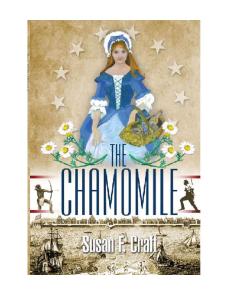
Susan F. Craft is the author of The Xanthakos Family Trilogy that spans from 1780 to 1836 and from the Blue Ridge Mountains, to Charleston, SC, to the NC Outer Banks and back. The first book in the series is The Chamomile, and the second is Laurel. The third, Cassia, will be released this September.

Wednesday, April 8, 2015

The Bells of St. Michael's

St. Michael's Church, Charleston, SC

Susan F. Craft
Author of The Chamomile, a SIBA Award-Winning Revolutionary War suspense, and of Laurel, a post-Revolutionary War suspense

        The bells were cast in London and installed in St. Michael's Church in Charleston, SC, in 1764. 
        When the British took over the city during the Revolutionary War, they took the bells back to England. At the end of the war, a Charleston merchant visiting England bought the bells and shipped them home to America.
        In 1823, cracks were found in some of the bells, and they were returned to London to be recast. 
        In 1862, during the siege of Charleston during the Civil War, the bells were moved to Columbia, the capital of South Carolina, for safekeeping, but Sherman's army set fire to the city. Only fragments of the bells were found and were sent to London once more, where the original molds still stood.
        In February 1867, the eight bells were again installed in St. Michael’s Steeple and on March 21 joyously rang out, "Home again, Home again from a foreign Land."

To hear a group of master bell ringers from London ring the bells of St. Michaels, click on this link: https://www.youtube.com/watch?v=25spIYJr4Ho

Shown in this century-old picture, a chimer uses a clavier
device to strike clappers against stationary bells. Chiming is now performed
from a keyboard in the choir loft and by a programmed mechanism.

Susan F. Craft's post-Revolutionary War suspense, Laurel, was released January 16.  It's sequel, Cassia, will be released this September by Lighthouse Publishing of the Carolinas.

Saturday, January 17, 2015

Laurel, a Post-Revolutionary War Inspirational Romantic Suspense

Stitches Thru Time's very own, Susan F. Craft’s newest novel, Laurel, was released this week. From 2-4 p.m. EST today, she’s celebrating the launch of Laurel on FaceBook at the following link: https://www.facebook.com/events/323605987833539/
Visit the online party, chat, and leave a comment for a chance to win some fantastic prizes.

Here's what she had to say About Laurel.
Desperate to rescue their kidnapped daughter, Lilyan and Nicholas Xanthakos trek two hundred miles through South Carolina mountains and backcountry wilderness, fighting outlaws, hunger, sleeplessness, and despair.

When the trail grows cold, the couple battles guilt and personal shame; Lilyan for letting Laurel out of her sight, and Nicholas for failing to keep his family safe.

They track Laurel to the port of Charleston as post-Revolutionary War passions reach fever pitch. There, Lilyan, a former patriot spy, is charged for the murder of a British officer. She is thrown into the Exchange Building dungeon and chained alongside prostitutes, thieves, and murderers. Separated from her husband, she digs deep inside to re-ignite the courage and faith that helped her survive the war. Determined to free his wife at any cost, Nicholas finds himself forced back into a life of violence he thought he’d left behind.

Following a rumor that Laurel may be aboard a freighter bound for Baltimore, Lilyan and Nicholas secure passage on a departing schooner, but two days into the voyage, a storm blows their ship aground on Diamond Shoals. As the ship founders, both are swept overboard.

Will their love for each other and their faith sustain them as they await word of their missing child? Or is Laurel lost to them forever?

Did you have to travel much concerning your books? If so, what’s the most interesting place you traveled?
Since I want my history to be right in my novels, I do extensive research and travel to the locations of my novels to absorb, to breathe in, everything I can: sights, sounds, smells.

Thank goodness my husband drives us, because I have no sense of direction and can get lost in my driveway.

The most fun trip was one we took to the North Carolina Outer Banks to research for Laurel and its sequel, Cassia. In Laurel, which takes place in 1783, my characters are shipwrecked on an Outer Banks island. Cassia, which takes place in 1799, has pirates. Between the two books, I knew I needed to learn more about the ships that sailed at that time, some of the nautical terms, and seafaring jargon.

In Beaufort, NC, I explored the Maritime Museum where I spent hours in the library that still uses a card catalogue system (at my age, I felt right at home).

I learned about the wild ponies that have roamed Ocracoke Island for hundreds of years and I became fascinated by the pirate lore of the area. A local restaurant owner pointed out an area for us to visit that still looks the same today as it did in the late 1700s.

You say you’d rather research than write.
It’s true. Researching for my novels brings me the same excitement Alan Quartermain must have felt hunting for King Solomon’s Mines. I’ve been known to spend an entire day in a library scribbling notes from someone’s diary, spending a wallet of quarters making copies of maps and old newspapers, and trekking from one book or document to the next with a perseverance Lewis and Clark would have applauded. I enjoy the chase when one clue leads me to the next, to the next…

On my website, http://www.susanfcraft.com, I have over twenty years of research on a wide range of topics. I knew I’d never be able to write enough novels to use all my “historical treasures,” so I decided to share and put them on my website.

Will you share one of your “historical treasures” found in Laurel?
During Colonial American times, toddlers sometimes wore padded pudding caps much like modern crash helmets to protect their heads if they fell while learning to walk. The caps were often made of quilted cotton velvet bound with silk ribbon, stuffed with horsehair, and lined with leather.

Here’s how I used that tidbit in my novel, Laurel. (Callum, a loveable curmudgeon and patriarch of the family, scoffs at the use of a pudding cap.)

        Callum had had a fit. “Such mollycoddling. Never heard of sucha thing. The lassie needs to learn how to come back from a fall. But she can’t do that unless she bangs her head once in a while.”
        The first time Laurel stumbled and hit her head, she had held up her arms to Callum, her bottom lip quivering. He had avoided Lilyan’s eyes as the unhappy little girl fell asleep cuddled against his chest.
        And that was the last complaint she heard from him about the pudding cap.

Which of your characters is most/least like you, and in what ways?
Except for not being able to find my way out of the woods, I identify most with my main character, Lilyan, who relies on her faith in God to get her through the dangerous and tragic happenings in her life.

About Susan
Susan’s Revolutionary War novel published in 2011, The Chamomile, won the Southern Independent Booksellers Alliance Okra Pick. Susan recently retired after a 41-year career as a communications director, editor, and proofreader. To assist authors to “get it right about horses in their works,” Susan worked with the Long Riders’ Guild Academic Foundation to compile A Writer's Guide to Horses (also known as An Equestrian Writer’s Guide) that can be found at www.lrgaf.org. Forty-five years ago, she married her high school sweetheart, and they have two adult children, one granddaughter, and a granddog. An admitted history nerd, she enjoys researching for her novels, painting, singing, listening to music, and sitting on her porch watching the rabbits and geese eat her daylilies. The sequel to Laurel, entitled Cassia, will be released this September.

Thanks for stopping by for a visit with Susan. Be sure to pick up a copy of her new book.

Wednesday, January 14, 2015

Lemon Castile Soap and Colonial Bathing Habits

Susan F. Craft
Award-winning author of historical suspense novels The Chamomile and Laurel

Centuries ago, Arab people in and around Europe often used animal fat as the fatty acid to make soap. Meanwhile, people in the Mediterranean found it most convenient to use the abundance of olive trees in their vicinity.

Specifically, many Mediterranean people used olive oil (fatty acid) and the ashes of the barilla tree (base) to make soap. One of the places to do this was the Castile region of Spain, so the soap from this area was called Castile soap, one of the first examples of hard, white soap to appear.

Some say it was reserved almost exclusively for the Spanish royalty; and later sought by a variety of European royalty for its mildness.

American immigrants brought cases of soap with them from Europe, and when their supplies ran out, they learned to make their own soap.

Like their European ancestors, colonists feared that bathing would destroy their natural oils and leave them open to the ravages of diseases, so getting clean meant sponging off. More affluent people had chinaware washbasins.

If masters desired a full bath, their servants would heat buckets of water in the kitchen and haul them to the bedroom. There were no towels to dry with, so they used large pieces of cloth or blankets. Full baths were considered a luxury not done more than a couple of times a year.

In my post-Revolutionary War suspense Laurel, my heroine, Lilyan, watches her husband bathe with lemon soap their hostess makes from goat's milk. It brings back a sweet memory before their daughter was kidnapped.

         The last time she saw him bathe, he had been sitting in the bathtub in front of the fire in their cabin with Laurel balanced on his chest. Laurel slapped her hands against the water and splashed it into his eyes. His comical faces sent their little girl into a fit of giggles. How she longed for those special family times. And to look upon her husband again with a desire free from the burden of grief and loss and guilt.

Join Susan F. Craft in the celebration of the release of her newest inspirational historical suspense, Laurel. The Online Book Launch Party will be on FaceBook Saturday, Jan. 17 from 2-4 p.m. EST. Come by, chat, and leave a comment for a chance to win some really great prizes. The party will be on Susan's author page, Susan F. Craft, at this link: https://www.facebook.com/events/323605987833539/

Saturday, January 3, 2015

Author Interview with our very own Susan F. Craft


I'm so excited that today we get to celebrate with our very own Stitches author, Susan F. Craft! She has a new book coming out this month, so let's give her a hearty Stitches-Thru-Time, whoop and hollar congratulations! HURRAY SUSAN!


For those of you that don't know her, Susan writes historical romantic suspense. Her Revolutionary War novel, The Chamomile, won the Southern Independent Booksellers Alliance Okra Pick.  She recently retired after a 45-year career as a communications director, editor, and proofreader.  To assist authors to “get right about horses in their works,” Susan worked with the Long Riders’ Guild Academic Foundation to compile A Writer's Guide to Horses that can be found at www.lrgaf.org. Forty-five years ago, she married her high school sweetheart, and they have two adult children, one granddaughter, and a granddog. An admitted history nerd, she enjoys researching for her novels, painting, singing, listening to music, and sitting on her porch watching the rabbits and geese eat her daylilies.  She has two post-Revolutionary War novels being released in 2015 by Lighthouse Publishing of the Carolinas—Laurel, in January, and its sequel Cassia in September. She is represented by Linda S. Glaz, Hartline Literary Agency.

Did you have to travel much researching for your books? If so, what’s the most interesting place you traveled?
Since I want my history to be right in my novels, I do extensive research and travel to the locations of my novels to absorb, to breathe in, everything I can: sights, sounds, smells.  Thank goodness my husband drives us, because I have no sense of direction and can get lost in my driveway.
Wild Ponies of Ocracoke Island
The most fun trip was one we took to the North Carolina Outer Banks to research for my upcoming books, Laurel and its sequel, Cassia. In Laurel, which takes place in 1783, my characters are shipwrecked on an Outer Banks island.  Cassia, which takes place in 1799, has pirates.  Between the two books, I knew I needed to learn more about the ships that sailed at that time, some of the nautical terms, and seafaring jargon. In Beaufort, NC, I stumbled upon a maritime museum where I spent hours in the library that still uses a card catalogue system (at my age, I felt right at home). I learned about the wild ponies that have roamed Ocracoke Island for hundreds of years and I became fascinated by the pirate lore of the area. A local restaurant owner pointed out an area for us to visit that still looks the same today as it did in the late 1700s.

Which of your characters is most/least like you?
Except for not being able to find my way out of the woods, I identify most with my main character, Lilyan, who relies on her faith in God to get her through the dangerous and tragic happenings in her life. 

If you could have dinner with one of your characters, who would it be and why?
That’s an easy one. I’d have dinner with Nicholas Xanthakos. I have a place in my heart for this gorgeous Greek who embodies all the traits you want in a hero—bravery, gentleness, honor, faith. (No need to tell my husband—he knows already J)
Here’s how Lilyan describes her husband in Laurel:
“She turned over and watched her husband’s chest rise and fall in his slumber, observing him as he lay in a partial shadow cast from the moonlight. His hands that could wield a knife with deadly accuracy—and yet gently rock a cradle. His arms that could sling an axe for hours—but also encircle his child and wife in a tender embrace. His broad shoulders that could bear the weight of a felled tree, and yet they provided a nestling place for his wife’s head. His firm chin that jutted out in moments of white-hot anger—but also nuzzled into his daughter’s feathery curls. Lips that shouted orders so harshly grown men cringed but also whispered endearments to his wife in their most intimate moments. She regretted the furrow that creased his brow, the only outward sign of how much he missed his koukla—his little doll.”

Do you have a life Bible verse?
…but those who hope in the Lord will renew their strength. They will soar on wings like eagles; they will run and not grow weary, they will walk and not be faint. (Isaiah 40:31)

Who is your greatest encourager?
Fortunately, I have several. My husband, my daughter and son, and my granddaughter are my cheerleading team. Rejection is painful and, over the years as I grew more discouraged about not being published and wondered if anything I wrote would be of interest to anyone, they lifted me up. 

Tell us about some of your personality traits.
I could be the poster child for persistence (some might call it hard-headedness). I’ve been writing for 35 years, honing my craft at more writing conferences and reading more books about writing than I can remember. I simply refused to give up until I found someone interested in representing and publishing my novels. For all those years I worked fulltime, took care of my family, and made time for writing—sometimes into the early morning hours. I’m sentimental and cry at Hallmark commercials. I love the Lord with all my heart and strive daily to please Him, though I fail miserably at times.

Where can people get a copy of your books?
You can purchase The Chamomile at all the major bookstores, some regional southern independent bookstores, Amazon, Kindle, and Nook. When Laurel is released January 12, it can be purchased at the same outlets as well as from Lighthouse Publishing of the Carolinas. 


I'm so glad you were able to join us today, Susan, and congratulations on your new release! 

Pssstt, hey ya'll don't forget to check back the week of January 12, because Susan is going to be giving away a copy of BOTH her books! 


About Susan's New Release, Laurel Available January 12!
 Searching for their toddler and her Cherokee aunt kidnapped by slavers, Lilyan and Nicholas Xanthakos trek from their North Carolina vineyard, through South Carolina backcountry to Charleston, a tinderbox of post-Revolutionary War passions. There Lilyan, a former Patriot spy, faces a grand jury on charges of murdering a British officer. Once free, they follow Laurel’s trail by sea and are shipwrecked on Ocracoke Island. Will they be reunited with their dear child or is Laurel lost to them forever?


You can keep up with Susan right here on the Stitches Thru Time blog, or on any of the following:

www.susanfcraft.com (my website)
http://historicalfictionalightintime.blogspot.com (Historical Fiction a Light in Time; my personal blog)
http://colonialquills.blogspot.com (post fourth Monday of each month)
http://www.hhhistory.com (Heroes, Heroines and History; post on the 31st of each month that has a 31st)
Twitter: https://twitter.com/susanfcraft @susanfcraft

Wednesday, November 5, 2014

Mopcap, a Colonial Fashion Statement

By Susan F. Craft
Author of The Chamomile, a Revolutionary War romantic suspense
A portrait by English painter Joseph Wright of an unidentified woman wearing a mopcap.

        A mopcap is a round, gathered or pleated cloth bonnet consisting of a caul to cover the hair, a frilled or ruffled brim, and sometimes a ribbon band.
        An informal style worn by colonial women at the beginning of the 18th century, it protected their hair from dust and dirt. Women also wore the mopcaps to bed to protect the covers from grease and from the powder and perfume that some of them used.

Cora Munro, a character in The Last of the
Mohicans, wears a mopcap under her straw hat.
        In the late 18th century, the mopcap became a high fashion item and was worn mostly indoors. For outdoor wear, the cap was worn under a straw hat.
        The mopcap was called a mobcap during the French Revolution, because the poorer women who were involved in the riots wore them, but mopcaps had been in style for the middle class and even the aristocracy since the century began.

To make a mopcap

You will need
  • ½ yard material (cotton or linen)
  • pencil
  • scissors
  • 36-inch length of ¼-inch ribbon
  • crewel or large-eyed needle (safety pin will also work)
  • rotary cutter with a wide skip blade - optional

Directions
  • From heavy paper or cardboard, cut an 18-inch diameter circle (use a charger plate or dinner plate to create the circle).

  • Draw a 15-inch circle inside that circle and cut it out of the center. This is now your pattern.
  • Place the pattern on material and cut an 18-inch circle. With a pencil, draw the 15-inch circle onto the material.
  • Along the pencil line, snip holes large enough for a ribbon to be threaded through them. (I used a rotary cutter with a wide skip blade. It’s like a pizza cutter for material, but fashioned so that when you roll it across the material, it makes dashed cuts.)


  • Cut a 36-inch long piece of ¼-inch ribbon and thread it into a crewel needle (large eye needle). Thread the ribbon up and down through the holes in the material until 2 inches from the starting place. (If you don’t have a needle, attach a safety pin to the ribbon and use that to thread the ribbon through the holes.)
  • Lightly gather the fabric along the ribbon, making sure that the ribbon tails are equal.
  • Place cap on head, pull the ribbon until the mopcap fits snugly, and tie the ribbon into a bow.

Wednesday, October 29, 2014

Colonial American Aromatherapy

Susan F. Craft
(Author of the award-winning Revolutionary War novel, The Chamomile.)


Considering unrefrigerated food, people’s infrequent full baths, chamber pots, odors from horses and other animals, and the fact that people wore shifts throughout several days and nights, can you imagine the odors that must have assaulted the noses of colonial Americans?

Or were they so acclimated to the smells that they didn’t notice? Apparently not.

Many colonists doused handkerchiefs with rosewater or other perfumes, or carried pomanders. A pomander, from the French pomme d'ambre, means apple of amber.
Pomander ball
A ball made of perfumes, such as ambergris, musk, or civet, pomanders were carried in a vase or worn in round containers hung from a neck chain or belt. For the wealthy, the containers were globular and usually perforated and made of gold or silver. Simpler pomanders were bags of fragrant herbs.
Venetian woman wearing a pomander chain around her waist.

Europeans carried nosegays, which were small, hand-held flower bouquets. They have existed in some form since at least medieval times.
A tussie-mussie, nosegay brooch

Posy brooches, or tussie-mussies as they were called in Victorian times, came in all shapes and sizes and enabled people to pin the flowers at the waist, the shoulder, or in the hair.

The term nosegay came about in fifteenth-century Middle English as a combination of nose and gay (gay meaning "ornament"). So, a nosegay was an ornament that appeals to the nose or nostrils.
 
How to make a pomander –
You will need:
• toothpick
• apple, orange, or lemon
• whole cloves
• ground cinnamon
• gallon-sized ziplock bag
• ribbon

Instructions:
• Prick holes in an apple, orange, or lemon using the toothpick. You can cover the fruit in rows or you can make the holes in a pattern.
• Push a whole clove into each of the holes you made, so that the top of the clove sits on the surface of the fruit.
• Put a tablespoon of ground cinnamon into a ziplock bag; place the fruit in the bag, and shake until the fruit is completely covered in cinnamon.
• Tie a ribbon around the fruit, making a knot or bow at the top of the fruit with a streamer.
• Hang the fruit in a cool, dry place for several weeks until the pomander is hard and dry.
• Hang the pomander in a room or fill a bowl with several of them and enjoy the sweet, fragrant arrangement.

In the 18th and 19th centuries, when people stepped out of their houses into the filthy, smelly streets, they would wear vinaigrettes, which were jewelry pieces that held vinegar-soaked sponges. If the odors of the streets were so strong that people felt faint, they would sniff the vinaigrette.
Vinaigrette

Monday, September 29, 2014

Weekly Wind-Up Comment to Win The Chamomile Book and Seeds


Congratulations to Melanie Backus who was the winner of last week's giveaway of a $10 Amazon Gift Card. (Compliments of Elaine Manders.)


If you are a winner, please contact us here with your address to claim your prize. 


This week's giveaway is:

The Chamomile by Susan Craft (with 3 seed packets)

Lilyan joins Patriot spies in British-occupied Charlestown, SC, to rescue her brother from a notorious prison ship. She’ll lie, steal, kill or be killed she promises Nicholas Xanthakos, a scout with Francis Marion’s partisans, who leads the mission. In Nicholas’ arms she discovers enduring love…a home. But that home is a long time coming. Her journey requires she save the life of one British officer but kill another to protect her Cherokee friend Elizabeth. In escaping bounty hunters, she treks miles of wilderness and very nearly loses everything before finally reuniting with her true love.

Comment on any post this week to enter!


Coming up this week:

Musing Monday: Devotion Dilemma by Catherine Castle

Tidbit Tuesday: Pets on the Titanic with new contributor Peggy Wirgau

Woven Wednesday: Colonial Craft with Susan Craft

Thoughtful Thursday: Book Review

Fun Friday: At the ACFW Conference with Joy Avery Melville

Sit-Down Saturday: Author Interview with Mona Hodgson

We look forward to hanging out with you this week!

    Winners will be announced in the Weekly Wind-up.

 Check out our Prizes Galore Page to see all our giveaways.

Announcements:

Stitches Thru Time author, Amber Schamel would like to invite you to a facebook Launch party for her new release, The Messiah's Sign! 

October 17th at 6pm Mountain Time on her facebook page.

https://www.facebook.com/events/564666010300320/

Sunday, June 8, 2014

The Chamomile Giveaway

So excited to announce that Britney Adams won this week's giveaway of a signed copy of my Revolutionary War novel, The Chamomile, as well as packets of chamomile seeds. 

Britney, I have the email address you left on your comment and will get in touch about the address to send your prize. 

Susan F. Craft
Represented by Linda S. Glaz, Hartline Literary Agency.

Wednesday, May 28, 2014

An Author's Garden

By Susan F. Craft
      I’m creating an “Author’s Garden” in my yard in honor of my Revolutionary War novel, The Chamomile, published in 2011, and its two sequels entitled, Laurel and Cassia, which will be published in 2015 by Lighthouse Publishing of the Carolinas. I’ve already planted six chamomiles and three laurel bushes.
     When they bloom, chamomile flowers look like daisies, except the yellow centers are cone-shaped instead of flat. When you walk through them, they give off an aroma of apples.
     The laurels, or mountain laurels, will have pink blossoms and glossy dark green leaves.
     I’ve ordered a cassia tree from a nursery, but it hasn’t arrived yet. It will have brilliant yellow, cascading blooms and will reach about ten feet tall. Cassia, the “poor man’s cinnamon,” is mentioned in the Bible several times as one of the ingredients of anointing oil. According to Psalm 45:8, when the Messiah returns, his robes will smell of cassia. (All your robes are fragrant with myrrh and aloes and cassia; from palaces adorned with ivory the music of the strings makes you glad. NIV)
     I’ve been searching for some garden sculpture and have found several that I like. Some are more serious and some are whimsical. Please, let me know which you like the best.
     I'm also thinking of painting some bricks like these.

Susan F. Craft is the author of the award-winning Revolutionary War Novel, The Chamomile.

Wednesday, April 30, 2014

Cravat, An 18th Century Fashion Statement

       
Mr. Darcy (Colin Firth) wears a swoon-worthy cravat.
        Whether dressed for a special occasion or for work or labor, men of the 18th century almost always wore a neckcloth.
        Called cravats, neckerchiefs, jabots, and neckties, they were most often made of white linen (usually 9” by 60” inches) that could be adorned with lace, fringe, or knots, and were worn loosely tied around the neck. Cravats first came into fashion in the mid-17 century.
        Neckclothitania, a pamphlet published in 1818, pictured popular ways of tying men’s neckwear. According to the author, there were many ways of tying a cravat and he had only intended “to merely give a slight sketch … of a dozen or so most in use.”

        There’s a fantastic Youtube video done by Jas Townsend and Son that describes the different styles of cravats, how to make them, and tie them. http://www.youtube.com/watch?v=QFAD1dAa2WQ
        Also, I found a site, Art, Beauty and Well-ordered Chaos, that has a post “How to Make an 18th Century Jabot. http://artbeautyandwell-orderedchaos.blogspot.com/2009/05/how-to-make-18th-century-jabot-stock-or.html
        Both of these sites are worth a visit.

Susan F. Craft is the author of The Chamomile, a SIBA award-winning Revolutionary War novel. She is represented by Linda S. Glaz, Hartline Literary Agency.

Tuesday, March 11, 2014

Cockades -- Political Lapel Pins of Yesteryear

By Susan F. Craft
   
Cockades, handcrafted ribbon rosettes, served as the political lapel pins of yesteryear. People wore them to identify themselves with their political stance, to declare their loyalty, to support their troops, and to show patriotism.
      At the time of the Revolutionary War, men pinned cockades on the side of their tricornes or cocked hats or on their lapels. Women also wore them on their hats or in their hair.
      During the American Revolution, the Continental Army initially wore cockades of various colors as a form of rank insignia. On July 23, 1775, General George Washington wrote: “As the Continental Army has unfortunately no uniforms, and consequently many inconveniences must arise from not being able to distinguish the commissioned officers from the privates, it is desired that some badge of distinction be immediately provided; for instance that the field officers may have red or pink colored cockades in their hats, the captains yellow or buff, and the subalterns green.”
 

     After a time, the Continental Army reverted to wearing the black cockade they inherited from the British. Later, when France became an ally of the United States, soldiers pinned the white cockade of the French Ancien RĂ©gime onto their old black cockade; the French reciprocally pinned the black cockade onto their white cockade, as a mark of the French-American alliance. These cockades became known as the "Union Cockade." By the time of the War of 1812, however, Americans had reverted to black cockades.
      A fantastic step-by-step demonstration of "How to Make an 18c Cockade" can be found on the blog, American Duchess, Historical Costuming at http://americanduchess.blogspot.com/2010/04/how-to-make-18th-c-cockades.html
      According to some historians, on April 19, 1775, when colonial militias confronted British troops at Concord’s North Bridge, they marched to the tune of “The White Cockade.” This was a traditional Scottish tune that celebrated the attempt by Bonnie Prince Charlie to reclaim the British throne for the House of Stuart. Colonists were familiar with this “rebellious” tune as a country dance and a fife and drum piece.
      You can hear this tune by going to this link: http://www.youtube.com/watch?v=me_LOrsFLsE

Susan F. Craft is the author of the award-winning novel, The Chamomile, a Revolutionary War romantic suspense that takes place in Charleston, SC, during the two years that the British occupied that city.